Why AI Agents in Government Are Becoming Largest Adopters
Published on: 22 June 2026
Author: Annapurna
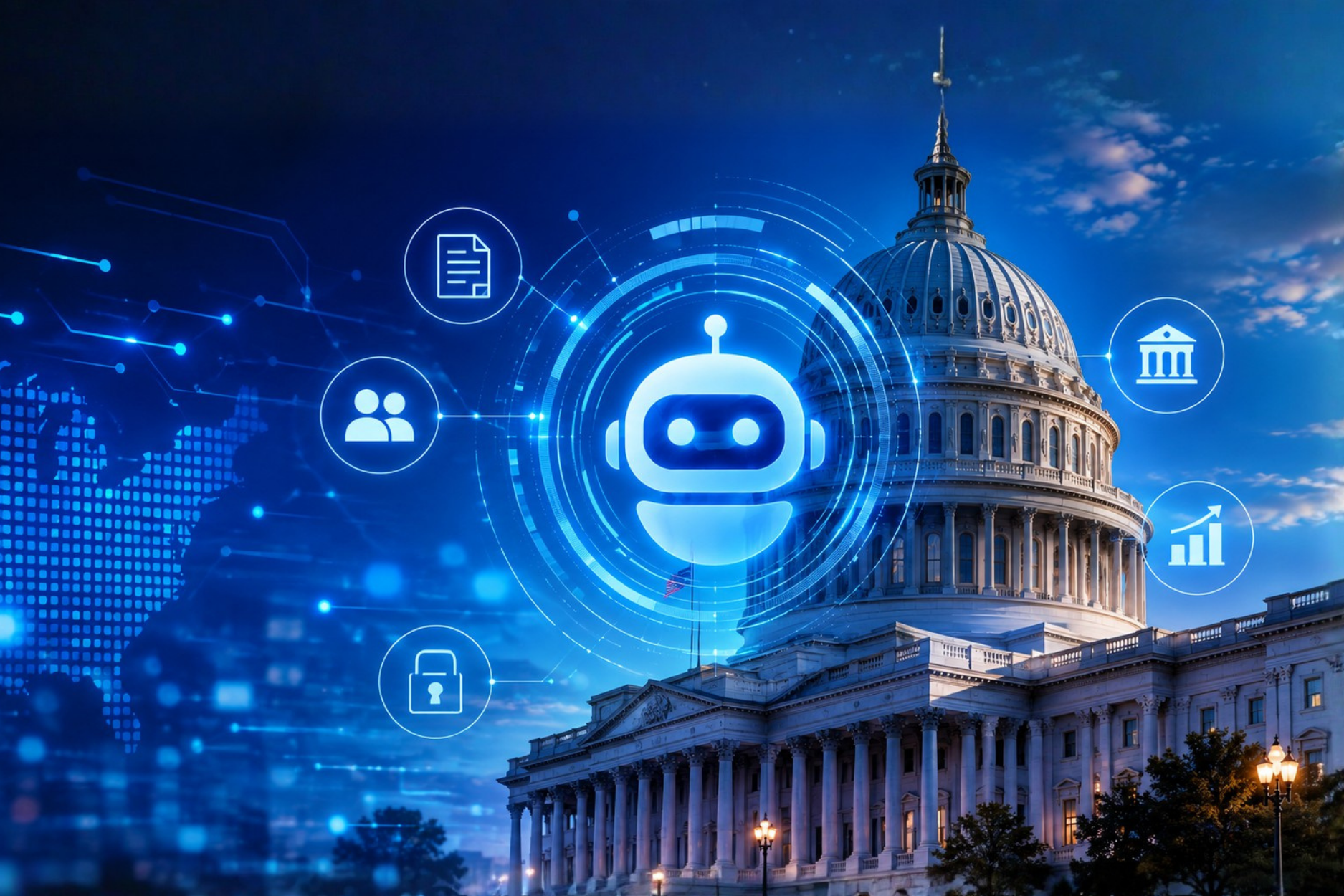
Government agencies have spent years experimenting with artificial intelligence. Most early initiatives focused on chatbots, document summarization, or limited pilot programs. In 2026, that trend has shifted dramatically. Public-sector organizations are now deploying AI agents that can complete tasks, coordinate workflows, make recommendations, and execute multi-step processes with minimal human intervention.
This evolution is transforming how governments deliver services, process applications, monitor compliance, and respond to citizen needs. Agencies facing staffing shortages, rising service demands, and budget constraints are increasingly turning to agentic AI to improve operational efficiency while maintaining governance and accountability.
TL;DR
Agentic AI is rapidly becoming one of the most important technology investments in government. Unlike traditional AI chatbots, AI agents can autonomously perform complex workflows such as permit approvals, case management, fraud detection, and citizen support. As agencies face growing pressure to do more with fewer resources, agentic AI offers measurable improvements in speed, efficiency, and service quality—provided it is deployed with the right governance and oversight.
What Does “Agentic AI” Actually Mean?

Before discussing adoption, it is important to understand the difference between traditional generative AI and agentic AI.
Generative AI creates content. It answers questions, summarizes documents, writes reports, and generates responses based on prompts.
Agentic AI goes much further.
AI agents can:
- Plan and execute tasks
- Access multiple systems
- Retrieve and analyze information
- Make decisions within defined boundaries
- Trigger workflows automatically
- Learn from outcomes and adapt processes

Think of generative AI as an intelligent assistant that provides information.
Think of agentic AI as a digital worker that can actually perform the work.
For example, a chatbot may tell a citizen which forms are required for a permit application. An AI agent can collect the forms, validate information, route approvals, monitor status, and notify stakeholders throughout the process.
This shift from conversation-based AI to goal-driven automation is why governments are paying close attention.
Why 2026 Became the Tipping Point
Several factors converged in 2026 to accelerate adoption of AI agents across federal, state, and local agencies.
Growing Public-Sector AI Investment
According to multiple industry surveys released throughout 2025 and 2026, AI has become one of the highest-priority technology investment areas for government CIOs. Modernization initiatives increasingly include AI automation as a core component rather than an experimental project.
Budget Pressure
Many agencies face the challenge of increasing service demands while operating under constrained budgets.
Rather than hiring additional staff for repetitive administrative work, agencies are exploring government AI automation to increase productivity and improve service delivery.
Citizen Expectations
Citizens increasingly expect government services to match the digital experiences they receive from private-sector organizations.
Waiting weeks for status updates, permit approvals, or case reviews is becoming increasingly unacceptable.
AI agents help agencies respond faster while improving transparency and consistency.
Maturing Technology
Agent orchestration platforms, retrieval-augmented generation, secure cloud environments, and policy-aware AI systems have matured significantly.
As a result, AI agents are now capable of operating within regulated environments while maintaining compliance and oversight.
The Bold Use Cases Driving Adoption
Benefits and Grants Processing
Government programs often require extensive review of applications, eligibility checks, document verification, and approvals.
AI agents can:
- Review submitted documentation
- Verify eligibility requirements
- Identify missing information
- Route approvals automatically
- Generate applicant communications
This dramatically reduces processing times while improving consistency.

Permit Approvals and Case Management
One of the fastest-growing applications for agentic AI for permit and case management is workflow automation.
AI agents can monitor permit applications, coordinate reviews across departments, track deadlines, and escalate exceptions requiring human intervention.
Instead of employees manually tracking hundreds of cases, agents continuously manage workflows around the clock.
Citizen Service Requests and 24/7 Support
Traditional citizen support often relies on call centers and limited operating hours.
AI agents can provide continuous assistance across:
- Public inquiries
- Service requests
- Application status checks
- Benefits questions
- Licensing support
Citizens receive faster responses while agencies reduce support workloads.
Compliance Monitoring and Fraud Detection
Compliance reviews frequently involve analyzing large volumes of data across multiple systems.
AI agents can continuously monitor transactions, identify anomalies, flag suspicious patterns, and recommend corrective actions.
This improves both compliance effectiveness and fraud prevention efforts.
The Real Payoff: Measurable Benefits for Agencies
The growing interest in AI agents is driven by measurable outcomes rather than hype.

Faster Service Delivery
Many government processes that previously required days or weeks can now be completed in hours.
This creates better citizen experiences while reducing administrative bottlenecks.
Increased Workforce Capacity
AI agents handle repetitive, rules-based tasks, allowing employees to focus on higher-value activities such as policy analysis, citizen engagement, and strategic planning.
Lower Operational Costs
Automation reduces manual effort across multiple departments, leading to significant cost savings over time.
Faster ROI
Many public-sector AI deployments begin generating value within the first 6–12 months by reducing workload volumes and improving processing efficiency.
The Hidden Risks Leaders Can’t Ignore
Accountability and Auditability
Government decisions must be explainable.
Every action taken by an AI agent should be traceable through comprehensive audit logs and decision records.
Agencies must maintain transparency regarding how decisions are made.
FOIA and Public Records Exposure
AI-generated outputs may become subject to Freedom of Information Act (FOIA) requests and public records requirements.
Proper record retention and governance processes are essential.
Bias and Fairness
Poorly designed AI systems can unintentionally create biased outcomes.
Agencies must evaluate models regularly and implement fairness testing throughout deployment lifecycles.
Security and Data Privacy
Government systems often contain sensitive citizen information.
Strong security controls, data protection measures, and role-based access management are critical components of responsible AI implementation.
Responsible Adoption: How Smart Agencies Get It Right
The most successful organizations do not begin with fully autonomous decision-making.
Instead, they follow a structured AI readiness framework government leaders can trust.
Human-in-the-Loop Controls
Humans remain responsible for final decisions in high-risk scenarios.
AI agents assist and accelerate processes but do not replace accountability.
Clear Decision Boundaries
Successful deployments define:
- What agents can do
- What requires approval
- Escalation procedures
- Risk thresholds
This ensures safe operation within established policies.
Governance and Compliance Frameworks
Strong agentic AI governance and compliance for federal agencies includes:
- Audit logging
- Security monitoring
- Model validation
- Bias assessments
- Access controls
- Continuous oversight
Governance should be built into the system from day one.
Start with Low-Risk Use Cases
The most successful agencies begin with:
- Internal operations
- Document processing
- Knowledge retrieval
- Citizen information services
These use cases provide quick wins while minimizing risk.
What’s Next: The Road Ahead for AI Agents in Government
The next wave of innovation will move beyond isolated AI tools toward autonomous mission workflows.
Future government AI agents will increasingly:
- Coordinate across agencies
- Analyze multimodal data
- Manage complex cases
- Support emergency response operations
- Assist workforce planning
- Enable predictive service delivery
The question is no longer whether AI agents will become part of government operations.
The question is how quickly agencies can adopt them responsibly.
A Practical First-Step Checklist for Agencies
If your agency is exploring AI agents, start here:

- ✅ Identify repetitive, high-volume workflows
- ✅ Evaluate existing data quality
- ✅ Define governance requirements
- ✅ Establish human review processes
- ✅ Select a low-risk pilot use case
- ✅ Measure outcomes and ROI
- ✅ Scale gradually based on results
Why BugendaiTech?
At BugendaiTech, we help federal, state, and local government organizations move beyond AI experimentation and build secure, scalable agentic AI solutions.
Our expertise includes:
- Government AI automation
- Agentic AI architecture
- Compliance-ready AI deployments
- AI governance frameworks
- Cloud modernization
- Data engineering and analytics
Whether you are evaluating your first AI agent or scaling enterprise-wide automation, our team can help you build responsibly and deliver measurable results.
Talk to Our Experts
Ready to explore how AI agents can transform your agency’s operations?
Connect with BugendaiTech’s AI and Government Solutions team to discuss your modernization goals and identify high-impact automation opportunities.