AI-Driven Branding: The Brilliant New Way to Build a Remarkable Visual Identity
Published on: 25 May 2026
Author: Jyoti
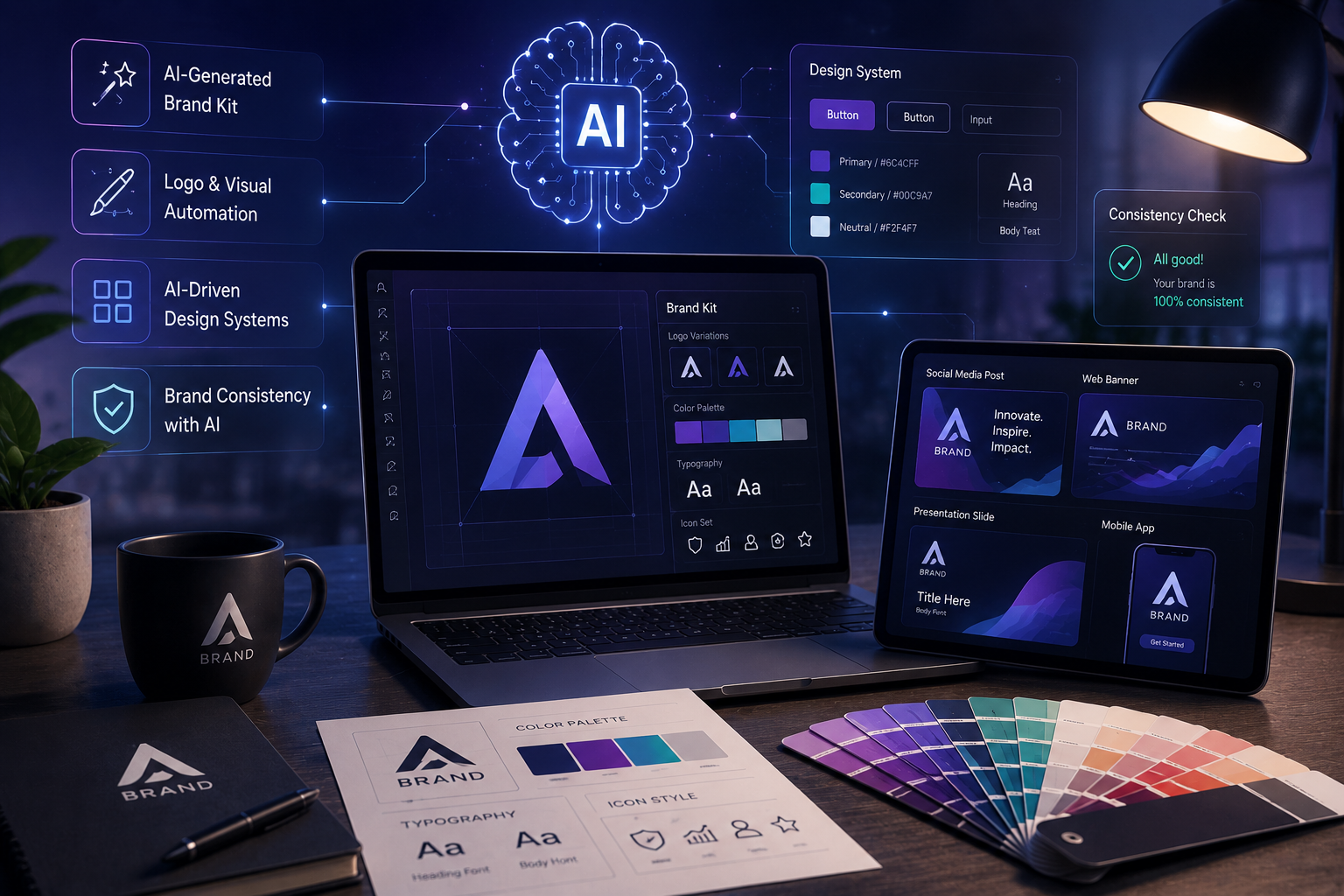
Artificial Intelligence is transforming branding faster than ever before. What once required weeks of strategy sessions, manual design work, and multiple creative teams can now be accelerated with AI-powered tools, intelligent automation, and adaptive design systems.
In 2026, brands are no longer using AI only for productivity, they are using it to build entire visual ecosystems.
From AI-generated brand kits and automated logo concepts to smart design systems and intelligent brand governance, AI is reshaping how businesses create, scale, and maintain visual identity across digital platforms.
Major creative platforms including Adobe, Canva, Figma AI, and generative design tools are rapidly integrating AI-driven branding workflows, enabling businesses to create scalable and consistent visual experiences faster than traditional methods.
The modern branding landscape is evolving from:

What is AI-Driven Branding?
AI-driven branding refers to the use of artificial intelligence technologies to create, optimize, automate, and maintain brand identity systems. This includes:

Instead of manually creating every visual asset from scratch, AI can now assist designers by generating concepts, scaling assets, predicting user preferences, and maintaining consistency across channels.
According to recent industry analysis, AI-assisted creative workflows are becoming standard practice for modern design and branding teams. (canva.com)
1. AI-Generated Brand Kits
One of the most impactful innovations in modern branding is AI-generated brand kits.
Traditionally, creating a complete brand identity involved:

This process often took weeks or months.
Today, AI tools can generate professional branding foundations within minutes.
What is an AI Brand Kit?

To generate brand recommendations.
Example: AI Brand Kit for a SaaS Startup
Imagine a cybersecurity SaaS company launching in 2026.

This dramatically reduces the initial branding timeline.
Modern AI branding tools are increasingly focused on accelerating creative workflows while maintaining design quality and scalability. (adobe.com)
2. Logo & Visual Identity Automation
Logo design is evolving beyond static manual creation.
AI-powered logo generation systems now help businesses:
- Generate multiple logo concepts
- Explore visual styles
- Create scalable icon systems
- Produce responsive logo variations
- Adapt logos across platforms automatically
How AI Logo Automation Works
AI tools analyze:
- Brand keywords
- Industry patterns
- User preferences
- Visual trends
- Competitor branding
Then generate:
- Symbol ideas
- Typography combinations
- Icon systems
- Layout variations
- Color applications
Instead of creating one static logo, AI helps brands build adaptive identity systems.
Example: AI Logo Personalization
A fitness platform may use AI to automatically adapt branding for different audiences:

3. AI-Driven Design Systems
Design systems are now becoming intelligent systems.
Traditional design systems focused on:
- UI components
- Color tokens
- Typography guidelines
- Spacing systems
AI-driven design systems go much further.
They can:
- Generate layouts automatically
- Recommend components
- Predict accessibility issues
- Maintain consistency
- Adapt interfaces dynamically
- Suggest UX improvements
According to design industry reports, AI-enhanced design systems are significantly improving scalability and reducing repetitive design work across enterprise teams.
Example: AI-Assisted Enterprise Design System

4. Maintaining Brand Consistency Using AI
One of the biggest challenges for growing businesses is maintaining brand consistency across platforms.
As brands expand across:
- Websites
- Social media
- Mobile apps
- Mobile apps
- Advertisements
- AI-generated content
visual inconsistency becomes a major risk.
AI is now helping organizations automate brand governance at scale.
How AI Maintains Brand Consistency
AI-powered systems can monitor:
- Typography usage
- Logo placement
- Color consistency
- UI patterns
- Image style
- Tone of voice
- Layout alignment
AI can instantly flag:
- Incorrect colors
- Off-brand assets
- Typography mismatches
- Accessibility issues
- Inconsistent messaging
Example: AI Brand Governance
A multinational company running campaigns across multiple countries can use AI to:

Modern AI-powered creative governance tools are increasingly helping enterprises standardize visual identity across distributed teams and digital platforms. (canva.com)
Why AI Branding Matters in 2026
The digital ecosystem is becoming:
- Faster
- More personalized
- More visual
- More content-heavy
Brands now need to produce:
- More assets
- More campaigns
- More personalization
- More variations
than ever before.
AI helps creative teams:
- Scale faster
- Reduce repetitive work
- Improve consistency
- Increase creative experimentation
- Speed up production cycles
Most importantly, AI allows designers to focus more on:
- Strategy
- Creativity
- Storytelling
- Human-centered experiences
instead of repetitive production tasks.
Emerging Trends in AI Branding & Visual Experience
1. Generative Brand Experiences
Brands are moving toward:
- More assets
- More campaigns
- More personalization
- More variations
than ever before.
AI helps creative teams:
- AI-generated visuals
- Personalized creative assets
- Dynamic layouts
- Adaptive storytelling
where user experiences change in real time.
2. Multimodal Brand Systems
AI is enabling brands to create connected experiences across:
- Text
- Voice
- Video
- Motion
- Interactive UI
- AR/VR environments
This creates more immersive digital experiences.
3. AI-Powered Hyper-Personalization
Future brand systems will personalize:
- Visual themes
- Messaging
- UI layouts
- Recommendations
- Interactive experiences
based on user behavior and intent.
4. Intelligent Creative Automation
AI tools are increasingly automating:
- Banner generation
- Social creatives
- Presentation design
- UI mockups
- Ad variations
- Campaign assets
while maintaining brand consistency.
Final Thoughts
AI is not replacing branding teams; it is transforming how branding is created, scaled, and maintained.
The future of branding lies in combining:
- Human creativity
- Strategic thinking
- Emotional storytelling with
- AI-powered automation
- Intelligent systems
- Adaptive visual experiences
Businesses that successfully integrate AI into branding workflows will gain:
- Faster creative production
- Stronger consistency
- Better scalability
- AI-powered automation
- Improved personalization
- More engaging customer experiences
As AI continues reshaping digital design, the most successful brands will not simply “use AI.”
They will build intelligent brand ecosystems powered by AI from the ground up.