AI Resume Screening Reveals the Hidden Cost of Manual Hiring
Published on: 24 July 2026
Author: Charmy Gajera
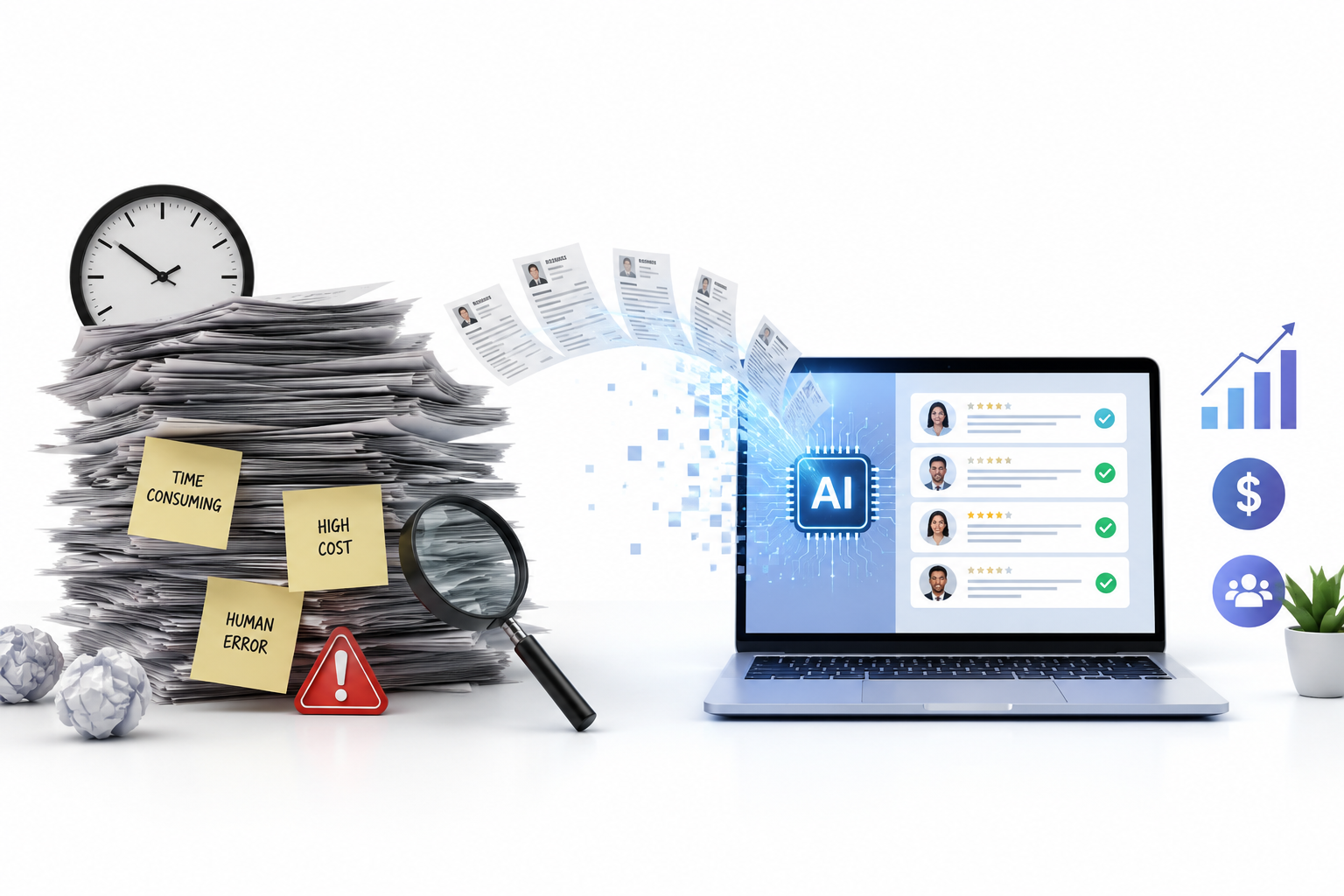
The Hiring Process Has Changed. Has Your Recruitment Process?
Today's hiring landscape is more competitive than ever.
Organizations receive hundreds, sometimes thousands of applications for a single position. While attracting talent has become easier through digital job portals like indeed, shine, naukri, etc. and social networks like linkedin, evaluating candidates remains one of the most time-consuming and resource-intensive stages of recruitment.
Yet many organizations still rely on manual resume screening, spreadsheet tracking, and rigid keyword-based filters to shortlist candidates.
The result?
Hiring decisions take longer, recruiters spend valuable hours on repetitive administrative tasks, and exceptional candidates often slip through the cracks.
The real challenge isn't attracting talent anymore.
It's identifying the right talent quickly.
Explore, How AI Technology Saves Recruiters Time and Reduces Errors
The Hidden Cost of Manual Resume Screening
Recruiters are expected to move fast while maintaining hiring quality.
However, manual screening introduces several challenges:

Extended Hiring Cycles
Reviewing hundreds of resumes manually can take days before the first interview is even scheduled.
Every additional day increases the likelihood of losing top candidates to competitors.
Administrative Overload
Recruiters often spend more time sorting resumes than engaging with candidates.
Instead of building relationships and evaluating potential, their day is consumed by repetitive administrative work.
Candidate Drop-off
Top talent rarely stays available for long.
When hiring decisions are delayed, qualified candidates frequently accept offers elsewhere.
Slow hiring directly impacts business growth.
Inconsistent Candidate Evaluation
Different recruiters may interpret resumes differently, leading to inconsistent shortlisting and unconscious bias.
Without standardized evaluation, hiring quality becomes difficult to maintain across teams.
Why Keyword-Based Screening Isn't Enough
Many recruitment systems still depend on exact keyword matching.
While keyword filters help reduce manual effort, they often fail to understand context.
Consider these examples:
- "Salesforce CRM"
- "SFDC"
- "Sales Cloud"
- "Customer Relationship Management Platform"
A traditional keyword search may treat these as different skills, even though they refer to closely related expertise.
As a result, qualified candidates may never reach a recruiter.
This creates false negatives, where capable applicants are rejected simply because their resumes don't contain the exact keywords the system expects.
Hiring decisions deserve more than keyword matching.
They require understanding.
Recruitment Needs Intelligence, Not Just Automation
Automation accelerates repetitive tasks. Intelligence improves decision-making.
Modern recruitment platforms are moving beyond document parsing to understand:
- Skills
- Experience
- Certifications
- Career progression
- Contextual relationships between technologies
- Overall candidate suitability
Rather than asking:
❌ "Does this resume contain the keyword?"
The better question is:
✅ "Is this candidate capable of succeeding in this role?"
That shift changes everything.

The Future of Hiring Is AI-Assisted
Artificial Intelligence is redefining how recruitment teams evaluate talent.
Instead of replacing recruiters, AI helps them focus on what matters most:
- Building relationships
- Conducting meaningful interviews
- Improving candidate experience
- Making informed hiring decisions faster
The result is a recruitment process that is both efficient and human-centric.

Know more how you can Empower Your Workforce with Smarter Hiring Through AI Innovation
Looking Ahead
The future of talent acquisition isn't about reading resumes faster. It's about understanding candidates better.
Organizations that combine human expertise with intelligent automation will be better positioned to attract, evaluate, and hire exceptional talent in an increasingly competitive market.
In our next article, we'll explore how AI-powered candidate intelligence goes beyond traditional resume parsing to help recruiters identify the right talent in minutes - not days.
Is your recruitment process keeping pace with today's talent market?
If your team is still relying on manual resume screening or keyword-based filtering, it may be time to rethink how candidates are evaluated.
Book a Demo
to have a glimpse of our Salesforce-native Intelligent Job Application Management solution that automates candidate screening, ranking, and recruiter collaboration using AI.
Stay tuned for our upcoming series on AI-powered talent acquisition, where we'll explore practical ways organizations can streamline hiring while improving candidate quality.