Cost of Missed Calls: Easy Ways to Stop Losing Customers
Published on: 11 August 2026
Author: Annapurna
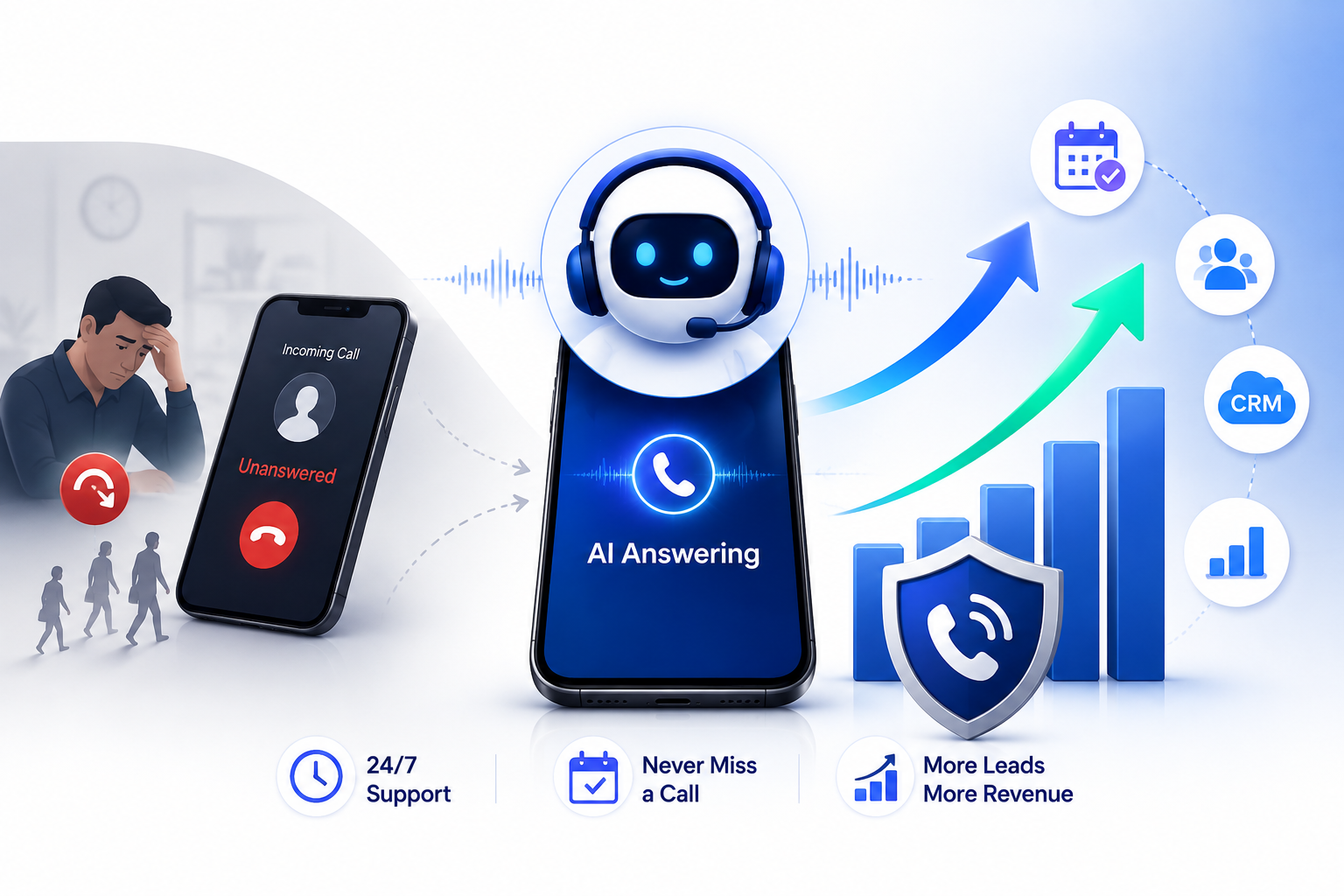
When a Customer Calls, Every Conversation Matters
A customer calls your business because they need something.
They may be looking for information, trying to make an appointment, following up on an inquiry, or simply looking for the right person to speak with.
But what happens when nobody answers?
The customer may wait, leave a voicemail, try again later, or look for another way to get help.
For businesses handling a high volume of inbound calls, consistently managing these conversations can become a real operational challenge.
This is where AI voice technology is changing the way businesses manage customer conversations.
AI VoiceOps provides AI voice agents that handle inbound and outbound calls end to end, from lead qualification and booking to live conversations and post-call analysis.
Why Do Businesses Lose Customers When Calls Aren't Answered?
Phone calls are often initiated when a customer has a specific need.
They may want to:
- Ask a question
- Make an appointment
- Follow up on an inquiry
- Get customer support
- Discuss a product or service
- Speak with someone from the business
When these conversations aren't handled efficiently, businesses can miss opportunities to engage with customers and prospects.
The challenge becomes even greater when teams are busy handling multiple conversations at once.
Instead of relying entirely on people to manually manage every call, businesses can use AI voice agents to handle defined calling scenarios and workflows.
The Hidden Cost of a Missed Call
A missed call doesn't automatically equal a lost customer, but it can create friction at an important moment. Consider a simple journey:

For businesses, the impact can extend beyond one conversation.
Missed or poorly handled calls can contribute to:
- Delayed customer responses
- Missed lead qualification opportunities
- Additional workload for support teams
- Delays in appointment booking
- Repetitive work for employees
- Inconsistent follow-up
The goal isn't simply to answer a phone.
It's to make sure the conversation moves forward.
What Happens When AI Handles the Conversation?
AI VoiceOps is designed around a continuous voice operations workflow.
The platform brings together:

Here's how it works.
1. Connect Your Data
Businesses can bring in their leads and business data so AI agents can call with relevant context.
2. Configure the AI Agent
Each agent can be configured with its:
- Name
- Script
- Voice
- Rules
- Workflow
These settings can be configured for different calling scenarios.
3. Launch Calls
AI VoiceOps supports both inbound and outbound conversations on hosted infrastructure.
4. Analyze Conversations
After conversations, the platform automatically generates:
- Recordings
- Transcripts
- Summaries
- Intent
- Next actions
This gives teams visibility into what happened during calls without having to manually review every conversation.
What Can AI VoiceOps Handle?
AI VoiceOps supports several business calling scenarios.
Sales & Outreach
AI agents can call new leads, ask relevant questions, qualify prospects, and route qualified prospects to the sales team.
Example:
A new lead enters the system.
Instead of waiting for a salesperson to manually follow up, an outbound AI agent can initiate the conversation, ask the configured qualification questions, and route the qualified prospect to the appropriate team.
Customer Support
AI VoiceOps can handle inbound calls and routine customer queries.
When human involvement is required, the conversation can be handed off with relevant context.
This helps businesses create a smoother transition between AI-assisted conversations and human support.
Reminders & Follow-Ups
Follow-up calls can be automated for scenarios such as:
- Appointment confirmations
- Payment reminders
- Next-step reminders
- Other configured follow-up workflows
The system can then update connected systems based on the workflow.
Post-Call Analysis
The conversation doesn't end when the call ends.
AI VoiceOps automatically generates recordings, transcripts, summaries, intent, and next actions for review.
This gives teams a centralized view of their voice operations instead of relying entirely on manually documented call notes.
AI Voice Bot vs. Traditional Call Handling
Businesses have several ways to manage customer calls.
| Approach | What It Offers | Common Challenge |
|---|---|---|
| Human-only support | Direct human interaction | Dependent on team availability and capacity |
| Voicemail | Captures messages when calls aren't answered | Doesn't actively handle the conversation |
| Traditional call flows | Structured routing | Can be limited for conversational interactions |
| AI Voice Agents | Inbound and outbound conversations, configured workflows, and automated analysis | Requires proper configuration and workflow setup |
AI VoiceOps takes a broader approach by combining the calling engine, agent configuration, connected business data, analysis engine, hosted infrastructure, and operations console into one operational stack.
What Should Businesses Look for in an AI Voice Bot?
Before choosing an AI voice platform, businesses should consider whether it can support their actual calling workflows.
Here are some important questions to ask:
Can it handle both inbound and outbound calls?
AI VoiceOps supports both inbound and outbound conversations.
Can it work with business data?
AI VoiceOps allows businesses to connect leads and business data so agents can operate with context.
Can calls be transferred to people?
For customer support scenarios, AI agents can hand off conversations with context when human involvement is needed.
Can businesses understand what happened during calls?
AI VoiceOps automatically provides recordings, transcripts, summaries, intent, and next actions.
Is everything managed in one place?
The platform includes a centralized operations console for visibility and control across voice workflows.
Why a Unified Voice Operations Platform Matters
Managing voice operations can involve multiple moving parts:

AI VoiceOps brings these stages together.
The platform connects business data, agent configuration, calling, conversation analysis, hosted infrastructure, and operational visibility into one system.
That means businesses don't have to think about a voice agent as simply a tool that "answers the phone."
It becomes part of the broader operational workflow.
Stop Letting Calls Become Dead Ends
The goal of AI voice automation isn't to replace every human conversation.
It's about making sure the right conversation happens at the right time and that teams have the context they need when human involvement matters.
With AI VoiceOps, businesses can use AI voice agents for:
- Lead qualification
- Customer support
- Appointment and booking workflows
- Reminders and follow-ups
- Inbound and outbound calling
- Post-call analysis
All within a unified voice operations platform.
Key Takeaway
Every customer conversation is an opportunity to understand intent, provide support, qualify a lead, confirm an appointment, or move the next step forward.
The challenge for businesses is managing those conversations consistently as call volumes and workflows grow.
AI VoiceOps brings AI voice agents, connected business data, calling, workflow configuration, and post-call analysis together in one platform, helping businesses manage inbound and outbound voice operations from one place.
Ready to see AI VoiceOps handle a real business scenario?