Intelligent UI/UX Experiences with AI: Your 2026 Breakthrough Guide
Published on: 01 June 2026
Author: Jyoti
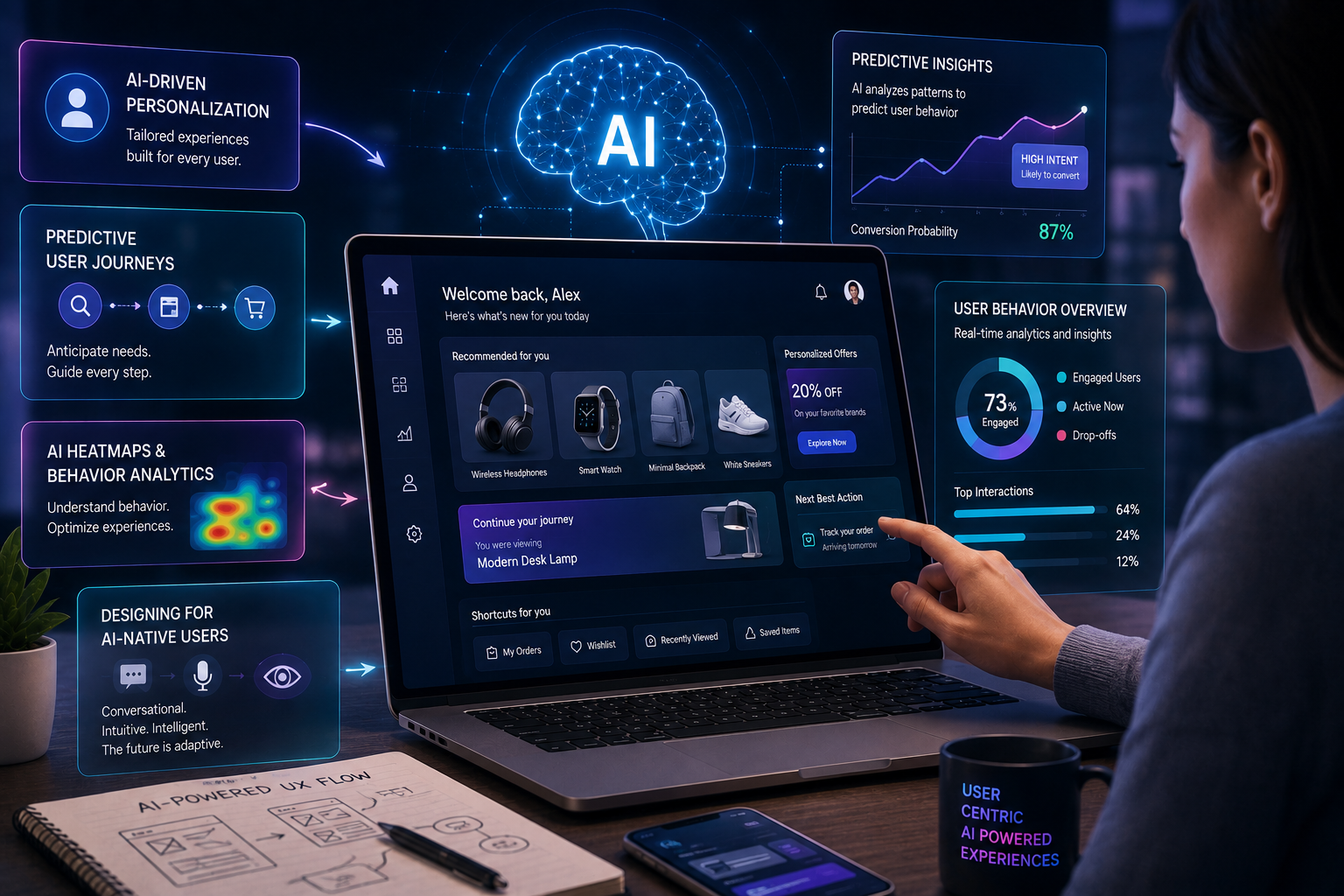
Artificial Intelligence is rapidly transforming the way users interact with digital products. Traditional UI/UX design focused heavily on static interfaces and predefined user journeys. In 2026, that approach is evolving into something far more intelligent, adaptive, and predictive.
Modern digital experiences are now powered by AI-driven personalization, behavioral analytics, predictive interactions, and real-time adaptive interfaces that continuously learn from user behavior.
Today’s users no longer expect generic experiences.
They expect:
- Personalized interfaces
- Smarter recommendations
- Faster interactions
- Predictive assistance
- Frictionless navigation
- Human-like digital experiences
This shift is driving the rise of AI-powered UI/UX design.
Recent advancements across AI-powered search, recommendation systems, and adaptive interfaces show that AI-native experiences are becoming the future of digital interaction. (uxdesign.cc)
What is AI-Powered UI/UX Design?

AI-powered UI/UX design refers to designing digital experiences that leverage artificial intelligence to:
- Personalize interfaces
- Predict user behavior
- Analyze engagement patterns
- Optimize user journeys
- Improve usability automatically
- Adapt experiences in real time
Instead of static user flows, AI-enabled interfaces continuously evolve based on:
- User preferences
- Browsing behavior
- Interaction history
- Contextual signals
- Intent prediction
The result is a more intuitive and intelligent user experience.
1. AI-Driven User Personalization
Personalization has become one of the most important aspects of modern UX design.
Traditional personalization relied on:
- User-selected preferences
- Basic segmentation
- Static recommendations
AI-driven personalization goes much deeper.
AI systems now analyze:
- Browsing behavior
- Interaction patterns
- Purchase history
- Device usage
- Location
- Search intent
- Time-based behavior
to dynamically adapt interfaces for each user.
Example: Personalized E-Commerce Experience
Imagine an AI-powered fashion e-commerce website.

User A:
Frequently shops for minimalist office wear.
The AI dynamically:
- Prioritizes neutral color collections
- Recommends formal outfits
- Displays productivity-focused messaging
- Highlights premium accessories
User B:
Mostly browses streetwear and sneakers.
The same website automatically:
- Shows trending urban collections
- Promotes influencer collaborations
- Displays dynamic video content
- Suggests personalized recommendations
Same platform.
Completely different experiences.
This level of personalization improves:
- Engagement
- Retention
- Conversion rates
- Customer satisfaction
According to industry UX research, AI personalization is becoming central to customer experience strategies across digital platforms. (forrester.com)
2. Predictive User Journeys
One of the biggest shifts in UI/UX design is moving from reactive design to predictive design.
AI can now anticipate:
- What users need
- Where users may drop off
- Which content users prefer
- What action users are likely to take next
This enables predictive user journeys.
What are Predictive User Journeys?
Predictive journeys use machine learning and behavioral analytics to guide users intelligently through a platform.
Instead of forcing users through predefined flows, AI dynamically adjusts experiences in real time.
Example: AI-Powered SaaS Onboarding
Imagine a SaaS platform onboarding new users.
AI detects:
- Which features users explore first
- Where confusion occurs
- Which steps are skipped
- Which actions correlate with successful activation
The platform then dynamically:
- Simplifies onboarding steps
- Recommends tutorials
- Triggers contextual tooltips
- Adjusts dashboard layouts
- Prioritizes relevant features
This reduces friction and improves onboarding success rates.
Modern AI-driven UX systems increasingly rely on predictive analytics to optimize digital journeys and reduce user drop-offs. (gartner.com)
3. AI Heatmaps & Behavioral Analytics
Traditional heatmaps helped designers understand:
- Click behavior
- Scroll depth
- Interaction zones
AI-powered behavioral analytics takes this much further.
AI can now analyze:
- Attention patterns
- User frustration
- Hesitation points
- Cursor behavior
- Navigation intent
- Engagement quality
This creates deeper UX insights.
Example: AI Heatmap Optimization
Imagine a landing page with poor conversion performance.

An AI heatmap tool identifies:
- Users ignoring the CTA
- High abandonment zones
- Confusing content blocks
- Sections causing friction
The AI then recommends:
- CTA repositioning
- Layout improvements
- Content hierarchy changes
- Visual attention optimization
Some AI systems can even generate optimized layouts automatically.
This helps UX teams make data-driven design decisions faster.
Behavioral AI analytics tools are increasingly helping businesses optimize interfaces using predictive engagement insights and real-time interaction analysis. (hotjar.com)
4. Designing for AI-Native Users
A new generation of users is emerging:
AI-native users.
These users are growing accustomed to:
- Conversational interfaces
- AI assistants
- Voice interactions
- Predictive recommendations
- Instant personalization
- Multimodal experiences
They expect interfaces to behave intelligently by default.
What Defines an AI-Native Experience?
AI-native experiences are designed around:
- Context awareness
- Conversational interaction
- Real-time adaptation
- Intelligent assistance
- Predictive UX
- Personalized interfaces
Users increasingly prefer:
- Asking instead of searching
- Conversing instead of navigating
- Receiving recommendations instead of filtering manually
This is changing how UX designers approach interfaces.
Example: AI-Native Travel Booking Platform

Traditional booking flow:
- Search flights
- Filter manually
- Compare options
- Select itinerary
AI-native booking experience:
Users simply type:
“Plan a 5-day beach vacation under ₹80,000.”
The AI:
- Recommends destinations
- Suggests hotels
- Builds itineraries
- Optimizes pricing
- Personalizes activities
This dramatically simplifies the experience.
According to industry reports, conversational and AI-native experiences are reshaping how users engage with digital products and services. (mckinsey.com)
Why AI UI/UX Matters in 2026
AI is changing user expectations across every industry.
Modern users expect:
- Instant interactions
- Personalized experiences
- Predictive recommendations
- Smart interfaces
- Seamless navigation
Businesses that fail to adapt risk creating outdated digital experiences.
AI-powered UX helps businesses:
- Improve engagement
- Increase retention
- Reduce friction
- Enhance accessibility
- Optimize conversions
- Deliver better customer experiences
Emerging Trends in AI-Powered UX
1. Conversational Interfaces
Chat-based UX and AI assistants are replacing traditional navigation-heavy experiences.
2. Adaptive Interfaces
Interfaces now dynamically change based on:
- Context
- Device
- User intent
- Behavioral signals
3. Emotion-Aware UX
AI systems are beginning to analyze:
- Sentiment
- Frustration
- Engagement quality
to create emotionally responsive experiences.
4. Multimodal Interaction Design
Future UX will increasingly combine:
- Text
- Voice
- Visual interaction
- Gesture-based interfaces
- AI assistants
into unified experiences.
Final Thoughts
AI is fundamentally transforming the future of UI/UX design.
Design is no longer just about:
- Layouts
- Colors
- Components
It is now about creating intelligent, adaptive, and predictive experiences that evolve continuously around users.
The future belongs to digital products that can:
- Understand users
- Predict intent
- Personalize dynamically
- Reduce friction
- Interact naturally
The most successful UX strategies in 2026 will combine:
Human-centered design
with
AI-powered intelligence.
Because the next generation of digital experiences will not simply be designed.
They will be intelligently personalized in real time.