Slack AI vs Traditional Chatbots: What Actually Works Better
Published on: 21 April 2026
Author: Annapurna
In the rapidly evolving landscape of business communication automation, the tools we use to manage information are shifting. For years, the "chatbot" was the gold standard for automation. However, with the rise of native artificial intelligence, a new contender has emerged: Slack AI.
Should you still use traditional chatbots, or is Slack AI the better choice?
Traditional chatbots are often rigid, following pre-defined paths, while Slack AI functions as a context-aware partner embedded directly within your workspace. To choose the right one, you must first understand chatbot limitations in enterprise workflows and where native AI takes over.
What is Slack AI vs Traditional Chatbots?
What is Slack AI?
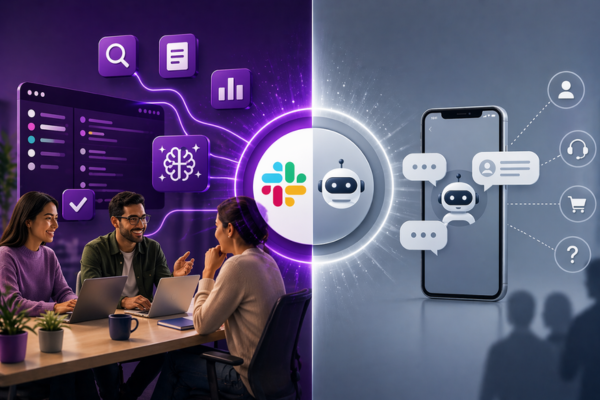
Slack AI is designed for internal automation, helping teams execute workflows, access data, and make decisions directly within Slack.
What are Traditional Chatbots?
Traditional chatbots automate external conversations, typically for customer support, FAQs, and lead generation.
Which Works Better?
Slack AI works better for internal productivity and workflow automation, while traditional chatbots are better for customer-facing interactions.
The real difference lies in context, intelligence, and integration depth.
Slack AI vs Traditional Chatbots
| Feature | Slack AI | Traditional Chatbots |
|---|---|---|
| Context Awareness | High | Low–Medium |
| Learning Ability | Adaptive | Limited |
| Use Case | Internal workflows | Customer support |
| Integration | Deep (Slack ecosystem) | API-based |
| Decision Support | Strong | Minimal |
| Workflow Automation | Advanced | Limited |
Before vs After: How Automation Has Evolved

Where Slack AI Works Best?
|
1. Internal Team Productivity Teams can:
|
2. Knowledge Retrieval Slack AI can:
|
3. Workflow Automation Slack AI can:
|
Where Traditional Chatbots Still Win?
Traditional chatbots remain effective for:
|
1. Customer Support
|
2. Lead Qualification
|
3. External Communication Chatbots are ideal for interacting with users outside the organization. |
Why Traditional Chatbots Fall Short in Enterprise Workflows?
Despite their usefulness, chatbots have limitations:

According to Gartner, modern enterprises are shifting toward AI-driven automation that goes beyond rule-based systems.
How Slack AI Solves These Limitations?
Slack AI introduces:
|
|
|
|
It acts as a decision-making layer, not just a response tool.
Key Differences Explained

When NOT to Use Slack AI
Slack AI is powerful, but not universal.
Avoid using it when:
- You need customer-facing automation
- Your workflows don’t rely on Slack
- External communication is the priority
- You require multi-channel chatbot deployment
Real-World Example
A growing SaaS company used traditional chatbots for customer queries but struggled internally.
|
Problems:
|
After implementing Slack AI:
|
Result: Faster operations and improved productivity.
Key Takeaways
- Slack AI and chatbots serve different purposes
- Slack AI is best for internal automation and workflows
- Chatbots are ideal for customer-facing use cases
- AI adds intelligence beyond rule-based automation
- Enterprises benefit from using both strategically
Conclusion
The choice between Slack AI and traditional chatbots isn’t about replacing one with the other; it’s about using the right tool for the right job.
Platforms like Slack are evolving into intelligent workspaces where AI drives decisions and workflows. Meanwhile, chatbots continue to play a key role in customer engagement.
For enterprises in 2026, the winning approach is clear: Use Slack AI for internal efficiency and chatbots for external interaction.
Looking to implement AI-powered automation for your business?