What Is Salesforce Marketing Cloud Next? Everything Changed Now
Published on: 01 June 2026
Author: Annapurna
What Is Salesforce Marketing Cloud Next? Everything Changed Now
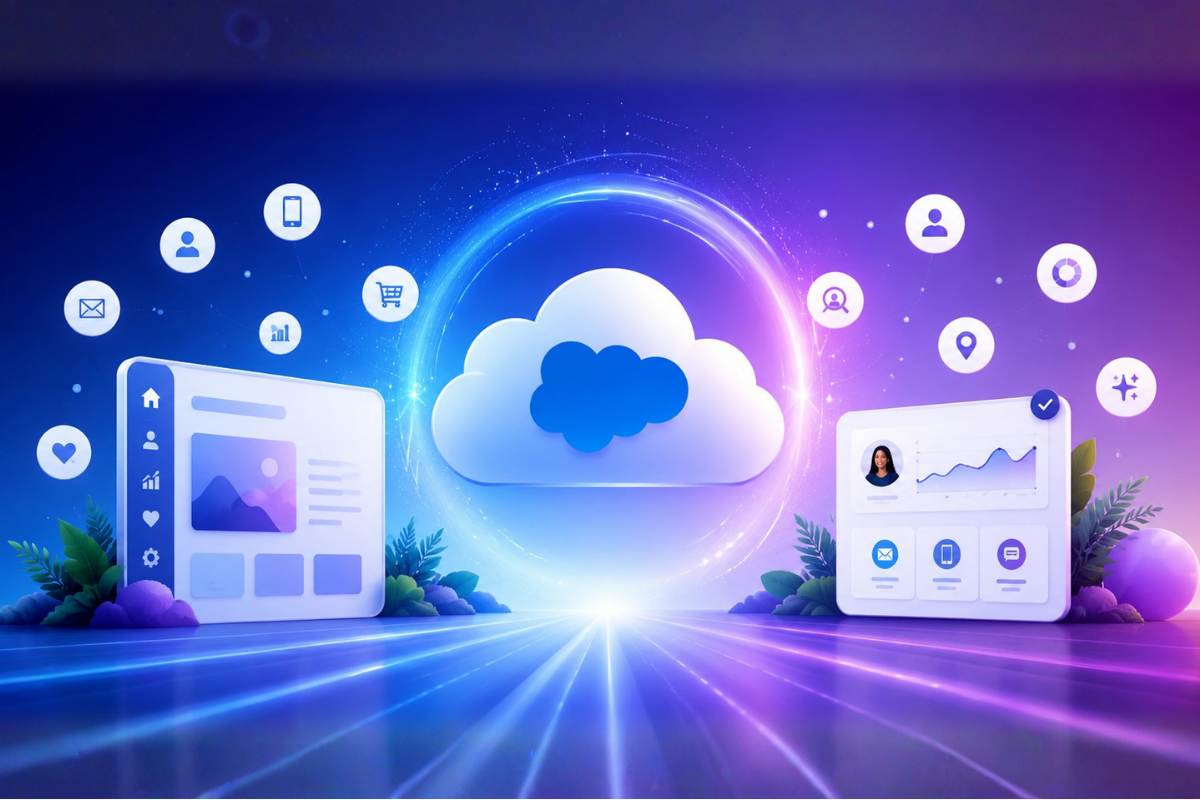
Salesforce Marketing Cloud Next is Salesforce’s new AI-first marketing platform designed to move businesses beyond traditional campaign automation and into real-time, agent-driven customer engagement.
Announced during Salesforce Connections 2025, Marketing Cloud Next combines Agentforce, Data Cloud, and Salesforce Flow into a unified marketing experience that helps marketers create, optimize, personalize, and execute campaigns with significantly less manual work. Instead of simply sending emails and waiting for responses, businesses can now create intelligent, two-way customer conversations powered by AI. Salesforce describes it as the next generation of marketing, where autonomous agents actively participate in customer engagement rather than supporting marketers behind the scenes.
For marketers, CMOs, Salesforce admins, and marketing operations teams, this is one of the biggest changes Salesforce has introduced since its acquisition of ExactTarget.
Key Takeaways
Quick Summary
- ✅ Marketing Cloud Next was announced at Salesforce Connections 2025.
- ✅ Built natively on Salesforce’s core platform.
- ✅ Powered by Agentforce, Data Cloud, and Salesforce Flow.
- ✅ Designed for both B2B and B2C marketing teams.
- ✅ Introduces agentic marketing and autonomous campaign execution.
- ✅ Creates real-time customer engagement instead of batch marketing.
- ✅ Existing Marketing Cloud customers do not need immediate migration.
- ✅ Represents Salesforce’s shift from “Do Not Reply” marketing to conversational engagement.
What Is Salesforce Marketing Cloud Next?
Salesforce Marketing Cloud Next is an AI-powered marketing platform built on Salesforce’s core architecture that combines customer data, workflow automation, and autonomous AI agents to create personalized customer experiences at scale.
Unlike traditional marketing automation platforms that rely heavily on manual campaign setup and scheduled journeys, Marketing Cloud Next introduces AI agents that can help build campaigns, generate content, qualify leads, optimize journeys, and respond to customer behavior in real time.

Marketing Cloud Next Overview
Marketing Cloud Next is not simply another Salesforce product release.
It represents Salesforce’s effort to unify years of marketing acquisitions, AI investments, customer data platforms, and automation tools into one connected experience.
According to Salesforce, Marketing Cloud Next combines:
- Agentforce AI Agents
- Data Cloud
- Salesforce Flow
- Customer engagement channels
- Campaign management
- Content management
- Personalization capabilities
into a single marketing platform.
The result is a platform where marketers spend less time building workflows and more time focusing on strategy and customer experience.
The Evolution of Salesforce Marketing
Timeline: How We Got Here
2013 - ExactTarget Acquisition
Salesforce acquired ExactTarget for approximately $2.5 billion, which became the foundation of Marketing Cloud.
2014–2020 - Marketing Cloud Expansion
Salesforce expanded the platform through:
- Journey Builder
- Email Studio
- Mobile Studio
- Advertising Studio
- Social Studio
2022–2024 - Data Cloud Era
Salesforce introduced Customer Data Platform capabilities through Data Cloud, focusing on unified customer profiles and real-time customer intelligence.
2025 - Salesforce Connections
Marketing Cloud Next officially launched at Salesforce Connections 2025 as Salesforce’s first full-funnel agentic marketing solution.
2026 - Agentic Marketing Expansion
Marketing Cloud Next continues evolving with Agentforce Marketing, deeper AI automation, predictive optimization, and autonomous customer engagement capabilities.

Why Salesforce Introduced Marketing Cloud Next
Marketing has fundamentally changed.
Customers now expect:
- Immediate responses
- Personalized experiences
- Consistent interactions
- Real-time engagement
Traditional marketing automation platforms were designed for campaign scheduling.
Modern customers require conversation-driven experiences.
Salesforce introduced Marketing Cloud Next because marketers needed:
- Faster campaign creation
- Better personalization
- Unified customer data
- AI-assisted decision making
- Real-time engagement capabilities
Salesforce calls this shift “agentic marketing” where AI agents actively assist marketers and customers throughout the engagement lifecycle.
The Three Core Pillars of Marketing Cloud Next
1. Agentforce
Agentforce serves as the intelligence layer.
It can help marketers:
- Generate campaign ideas
- Create content
- Build audience segments
- Recommend optimizations
- Analyze campaign performance
- Qualify leads
Instead of waiting for marketers to manually perform tasks, Agentforce actively assists and recommends actions.
2. Data Cloud (Data 360)
Data Cloud provides the customer intelligence foundation.
It unifies:
- Customer profiles
- Behavioral data
- Transaction data
- Engagement history
- Third-party data sources
This allows Marketing Cloud Next to personalize every interaction using real-time customer context.
3. Salesforce Flow
Every campaign in Marketing Cloud Next starts with Flow.
Salesforce has positioned Flow as the orchestration engine that automates actions across the customer lifecycle.
This enables:
- Cross-channel automation
- Journey orchestration
- Trigger-based engagement
- Real-time decision making
without requiring extensive custom development.
How Marketing Cloud Next Works
The process follows a connected intelligence model:
Step 1
Data Cloud unifies customer information.
Step 2
Agentforce analyzes customer context.
Step 3
Flow orchestrates engagement actions.
Step 4
Marketing Cloud executes personalized experiences.
Step 5
Results are continuously fed back into the system.
The platform essentially creates a self-improving engagement loop powered by AI.

Marketing Cloud vs Marketing Cloud Next
| Traditional Marketing Cloud | Marketing Cloud Next |
|---|---|
| Campaign-centric | Customer-centric |
| Batch automation | Real-time engagement |
| Manual optimization | AI-assisted optimization |
| Separate data systems | Unified Data Cloud |
| Journey Builder focused | Flow orchestration focused |
| One-way communication | Two-way conversations |
| Marketer executes actions | Agentforce assists execution |
| Channel-based personalization | Context-based personalization |
Sources indicate Salesforce is positioning Marketing Cloud Next as a major architectural shift rather than a simple feature update.
Why Marketing Cloud Next Matters
One phrase from Salesforce Connections 2025 stood out:
“The do-not-reply era is over.”
For years, marketing automation focused on sending messages.
Marketing Cloud Next focuses on creating conversations.
This changes marketing from:
- Campaign execution
- Scheduled journeys
- Static personalization
to:
- Real-time responses
- AI-driven engagement
- Autonomous optimization
- Continuous customer conversations
Salesforce calls this the transition toward agentic marketing.
Is Marketing Cloud Next Replacing Marketing Cloud?
No.
This is one of the biggest misconceptions.
Salesforce has made it clear that current customers can continue using:
- Marketing Cloud Engagement
- Account Engagement (Pardot)
- Existing journeys
- Existing integrations
Marketing Cloud Next is designed to coexist with existing investments while organizations gradually adopt newer capabilities.
Think of it as an evolution rather than an immediate replacement.
Who Should Care About Marketing Cloud Next?
Salesforce Admins
Need to understand new platform architecture and governance.
CMOs
Need to prepare for AI-driven customer engagement.
Marketing Operations Teams
Need to redesign workflows around automation and AI.
B2B Marketers
Can unify lead management and engagement strategies.
B2C Marketers
Can create real-time personalized customer experiences at scale.
Salesforce Partners
Need to prepare clients for the transition toward agentic marketing models.

How BugendaiTech Helps
At BugendaiTech, we help organizations modernize Salesforce ecosystems through:
- Marketing Cloud implementation
- Agentforce adoption
- Data Cloud integration
- Customer journey optimization
- AI-powered marketing transformation

As Marketing Cloud Next continues to evolve, businesses need implementation partners who understand both traditional Salesforce marketing architecture and the emerging AI-first model.
Conclusion
Marketing Cloud Next is not simply a rebranding exercise.
It represents Salesforce’s biggest marketing transformation since the ExactTarget acquisition.
By combining Agentforce, Data Cloud, and Salesforce Flow into one platform, Salesforce is moving marketing from campaign automation toward autonomous customer engagement.
Businesses do not need to replace existing systems immediately, but they should begin preparing for a future where AI agents actively participate in customer interactions, campaign optimization, and decision making.
The companies that start building this foundation now will be better positioned as agentic marketing becomes mainstream.
Want to understand how Marketing Cloud Next, Agentforce, and Data Cloud fit into your Salesforce strategy?
Connect with the BugendaiTech team to explore implementation roadmaps, migration strategies, and AI-powered marketing transformation.