AI VoiceBot for Hospitality: Better Bookings, Happier Guests
Published on: 19 June 2026
Author: Charmy G
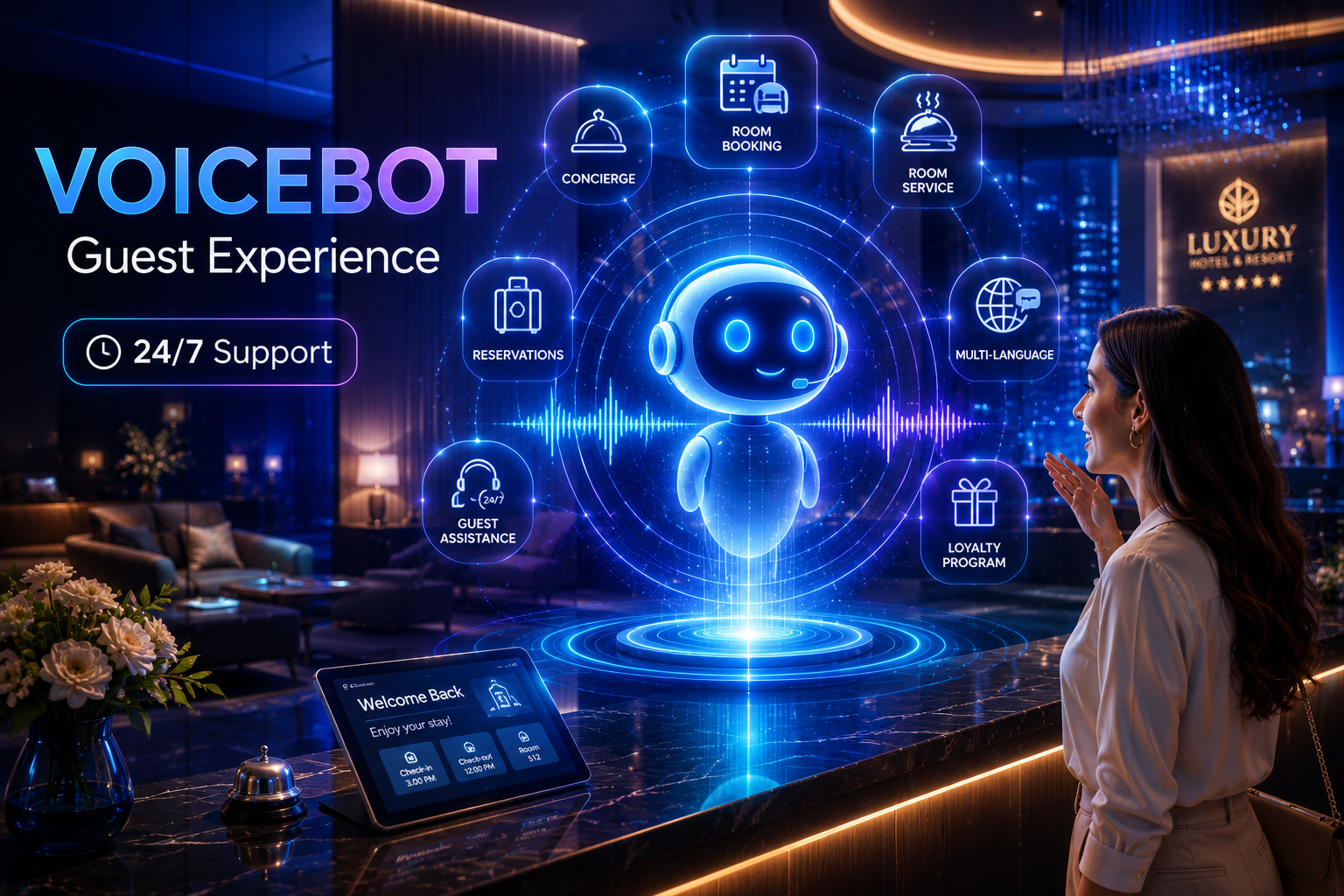
AI VoiceBot for Seamless Guest Experiences
Every guest interaction shapes perception, loyalty, and revenue in hospitality — but delivering consistently responsive service has become increasingly difficult to scale.
Hospitality teams are expected to manage booking requests, answer repetitive guest questions, support multiple communication channels, and maintain personalized experiences while operating with limited staff and fluctuating demand.
The challenge is no longer whether guest conversations can be automated. It is deciding how hotels can extend service availability and responsiveness without compromising the quality of the guest experience — and this is where AI-powered VoiceBots are emerging as a new engagement layer.
What a VoiceBot means for hospitality operations
A VoiceBot is an AI-powered conversational assistant that allows guests to interact naturally through voice across websites, phone systems, mobile applications, and digital service channels.
Unlike traditional menu-based IVR experiences that depend on fixed paths and manual selection, VoiceBots interpret intent, maintain context across interactions, and trigger actions through connected business systems such as reservations, CRM, and guest service platforms.
For hospitality teams, the value is not replacing human service—it is reducing friction in high-volume guest interactions and making support more responsive across the entire guest journey.
Where VoiceBots Create Value Across the Guest Journey
1. Manage Reservation & Booking Requests
Guests expect booking experiences to feel as simple as having a conversation.
VoiceBots can support reservation-related requests including:
- Checking room availability
- Comparing room options
- Booking stays
- Modifying reservations
- Managing cancellation requests
Example:
“Book a deluxe room for two guests from Friday to Sunday.”
The operational impact is fewer repetitive booking interactions reaching front desk and support teams.
2. Answer Frequently Asked Questions (FAQs) Instantly
Many hospitality support requests are repetitive and time-sensitive.
VoiceBots can provide immediate responses for:
- Check-in and check-out details
- Property amenities
- Cancellation policies
- Parking information
- Pet policies
- Event schedules
- Local recommendations
Example:
“What time does breakfast start?”
This reduces wait times while helping staff focus on higher-value guest interactions.
3. Personalized Guest Assistance
When connected to guest data and preferences, VoiceBots can support more personalized experiences.
Examples include:
- Recommending room upgrades
- Suggesting dining options
- Presenting relevant packages
- Offering local experiences
Example:
“Would you like to upgrade to our ocean-view suite?”
The objective is not personalization for its own sake—it is helping guests make faster and more relevant decisions.
4. Support Multi-Language Conversations
Hospitality serves travelers with different languages, expectations, and communication styles.
Voice-enabled interactions can improve accessibility and maintain service consistency across regions without expanding support operations proportionally.
5. Enable Contactless Guest Experience
Voice interactions can simplify service requests without requiring guests to navigate multiple channels.
Examples include:
- Self check-in support
- Concierge requests
- Room service ordering
- Housekeeping requests
Example:
“I need extra towels in Room 512.”
6. Automate Post-Stay Engagement
Guest experience does not end when a stay concludes.
VoiceBots can support post-stay interactions such as:
- Collecting feedback
- Sending satisfaction surveys
- Promoting loyalty engagement
- Encouraging future bookings
Example:
“How was your stay with us?”

- → Hotel Booking Assistant - Guide guests from inquiry to reservation.
- → Virtual Concierge - Answer guest questions and recommend services.
- → Room Service Ordering - Allow guests to order through voice interactions.
- → Event & Conference Support - Assist attendees with schedules and venue information.
- → Loyalty Program Assistant - Help guests redeem points and check membership status.
- → Guest Feedback Collection - Capture reviews and identify service improvements.
- → Travel & Activity Recommendations - Suggest nearby experiences based on guest preferences.
- → Emergency Assistance - Provide quick routing for urgent guest support requests.
How Customers or Website Visitors Interact with VoiceBot
Guest interactions typically follow a conversational flow rather than a traditional support process.
Step 1: Start the Conversation
The guest visits a website, mobile application, or calls a hospitality support line.
Step 2: Explain the Request
Guests speak naturally.
Examples:
- “Book a room”
- “I want early check-in”
- “Show available packages”
- “Connect me to reservations”
Step 3: Interpret Intent and Collect Context
The VoiceBot identifies the request and gathers the information required to complete the interaction.
Step 4: Complete or Route the Request
Based on the request, the VoiceBot may:
- Create a reservation
- Retrieve information
- Update booking details
- Open service requests
- Transfer to a live team member
Step 5: Continue Engagement
Guests receive confirmations, updates, recommendations, and ongoing support across channels.

Business Outcomes Hospitality Teams Can Expect
When implemented with the right operating model, VoiceBots can help hospitality organizations:
- ✓ Improve guest response times
- ✓ Extend service availability beyond operating hours
- ✓ Reduce repetitive support workload
- ✓ Improve booking conversion opportunities
- ✓ Create more consistent guest experiences
- ✓ Support operational efficiency
- ✓ Increase opportunities for upsell and retention
The long-term value comes from designing conversations that remove friction while keeping hospitality experiences personal.
Conclusion
Guest expectations continue to evolve faster than hospitality operations can scale through traditional support models alone. Travelers expect instant responses, convenient booking experiences, personalized recommendations, and assistance that remains available across every stage of their journey.
VoiceBots are helping hospitality teams respond to that shift by making guest interactions more accessible, responsive, and operationally efficient. From reservations and concierge services to post-stay engagement, conversational experiences can reduce repetitive workloads while allowing teams to focus on moments where human interaction matters most.
The opportunity is not simply adding another communication channel. It is designing guest experiences that remove friction, maintain service consistency, and create more meaningful interactions across digital and voice touchpoints.
As hospitality organizations evaluate their guest engagement strategy, the question becomes: where can conversational experiences create faster service without reducing the personal touch guests expect?