Is Your Healthcare Data Ready for AI? A Data Quality Checklist
Published on: 03 August 2026
Author: Annapurna
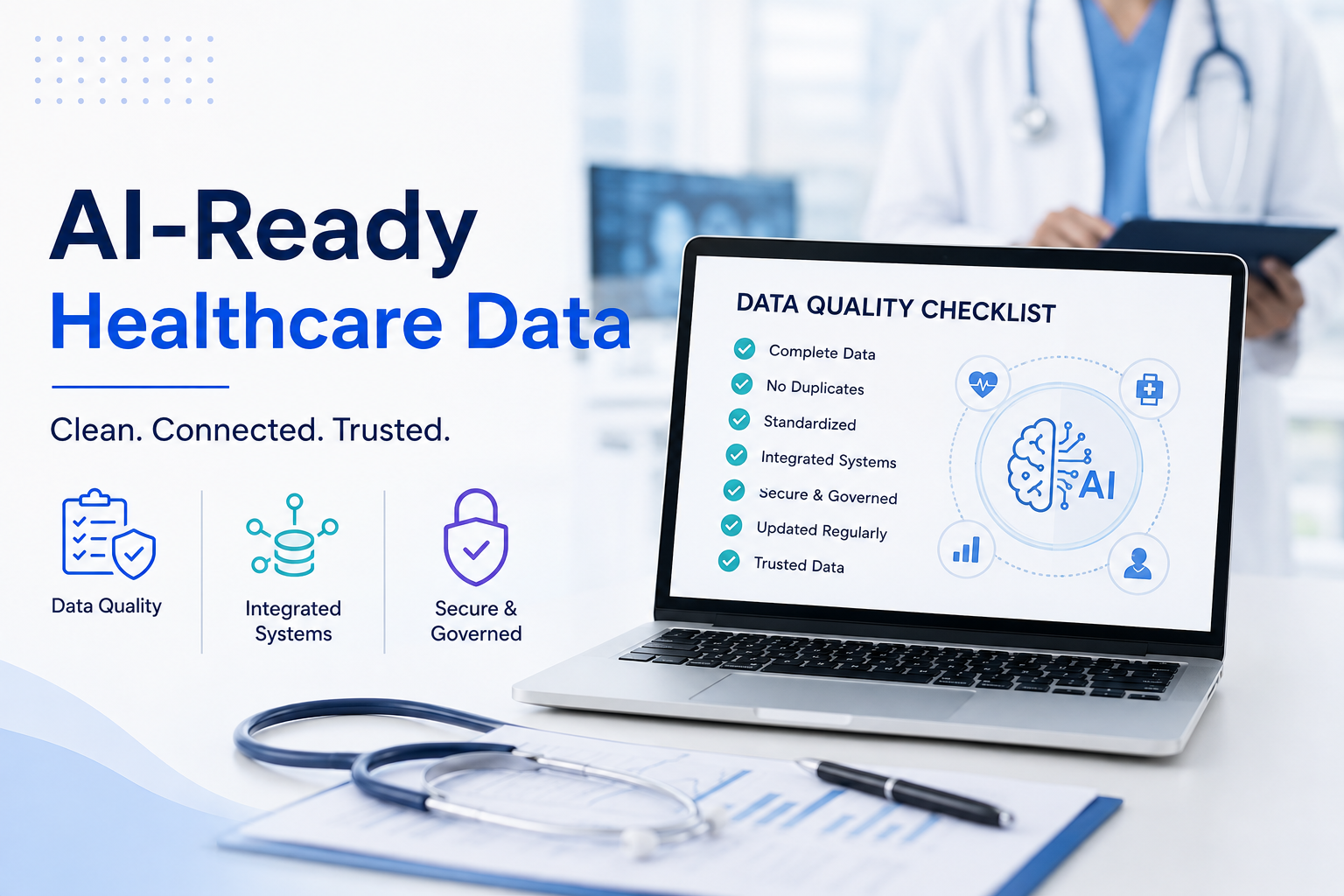
"Healthcare AI is only as intelligent as the data it learns from."
Artificial Intelligence is transforming healthcare, from predicting patient risks and automating administrative tasks to supporting clinical decisions. But despite growing investments, many AI initiatives fail to deliver meaningful results.
The reason isn't the AI model; it's the data behind it.
Incomplete patient records, duplicate data, inconsistent coding, and disconnected systems can significantly reduce the accuracy and reliability of AI-driven insights. Before implementing AI, healthcare organizations need to ensure their data is clean, connected, secure, and trustworthy.
Here's a practical checklist to assess whether your healthcare data is truly AI-ready.
What Does AI-Ready Healthcare Data Mean?
AI-ready healthcare data is accurate, complete, standardized, secure, and easily accessible across systems.
AI models depend on high-quality data to generate reliable insights. If healthcare data is fragmented or inconsistent, AI can produce inaccurate recommendations, affecting operational efficiency and patient outcomes.
Why Does Data Quality Matter for Healthcare AI?
Poor-quality data leads to poor AI outcomes.
According to Gartner, poor data quality costs organizations millions of dollars every year through inefficiencies and poor decision-making. In healthcare, the impact is even greater because inaccurate data can affect patient care, compliance, and reporting.
Common data quality issues include:
- Duplicate patient records
- Missing clinical information
- Inconsistent coding standards
- Outdated data
- Disconnected Electronic Health Record (EHR) systems
Improving EHR data quality is one of the first steps toward successful AI adoption.
What Are the Biggest Challenges in Healthcare Data Integration?
Healthcare organizations often store data across multiple disconnected systems.
Clinical systems, EHRs, laboratory applications, imaging platforms, and billing software frequently operate independently, making it difficult to create a complete view of patient or program data.

Without effective healthcare data integration, organizations struggle with:
- Delayed reporting
- Manual data consolidation
- Inconsistent information
- Limited visibility across departments
A unified data foundation enables AI to generate faster and more accurate insights.
Healthcare Data Quality Checklist
Before launching your next AI initiative, ask these questions.
| Checklist | Why it matters |
|---|---|
| ✅ Is your patient data complete? | Missing information reduces AI accuracy. |
| ✅ Are duplicate records removed? | Duplicate data creates conflicting insights. |
| ✅ Is data standardized? | Consistent coding improves interoperability. |
| ✅ Are your systems integrated? | AI performs better with connected data sources. |
| ✅ Is sensitive data governed securely? | Supports HIPAA compliance and responsible AI. |
| ✅ Is data updated regularly? | AI requires current information for accurate predictions. |
| ✅ Can users trust the data? | Trusted data leads to confident decision-making. |
If you answered "No" to several of these questions, your organization may need to strengthen its data foundation before expanding AI initiatives.
How Can Healthcare Organizations Prepare Data for AI?
Preparing healthcare data for AI starts with governance, integration, and continuous quality improvement.
Focus on these five areas:
- Improve Data Quality: Clean inaccurate, incomplete, and duplicate records before training AI models.
- Integrate Data Sources: Connect EHRs, operational systems, financial applications, and external datasets into a unified platform.
- Establish Data Governance: Define ownership, quality standards, access controls, and compliance policies.
- Standardize Clinical Data: Use common healthcare standards such as HL7® FHIR® and standardized coding practices to improve interoperability.
- Monitor Data Continuously: AI readiness isn't a one-time project. Continuously monitor data quality, governance, and accuracy.
Mini Example
A regional healthcare organization wanted to use AI to predict patient readmissions.
However, patient information was spread across multiple systems with duplicate records and inconsistent coding.
After improving healthcare data integration, standardizing records, and implementing stronger governance, the organization created a trusted data foundation that significantly improved reporting quality and AI model performance.
The biggest breakthrough wasn't the AI itself, it was preparing the data first.
Is Your Organization AI-Ready?
Use this quick assessment.
- Your EHR data is complete and standardized.
- Systems are connected through a unified data platform.
- Data governance policies are clearly defined.
- Duplicate records are actively managed.
- Data quality is monitored regularly.
- Teams trust the data used for reporting and analytics.
The more boxes you check, the stronger your AI foundation becomes.
Conclusion
Healthcare organizations are eager to embrace AI, but success starts long before deploying a model.
Organizations that invest in healthcare data integration, EHR data quality, and governance build a foundation for reliable analytics, better clinical insights, and improved operational outcomes.
Before asking whether your organization is ready for AI, ask a simpler question:
Is your data ready?
Preparing healthcare data for AI doesn't have to be overwhelming.
Whether you're modernizing analytics, improving data quality, or planning an AI initiative, our team can help you build a trusted, AI-ready data foundation.