Salesforce for Transportation: 9 Easy Ways to Boost Revenue
Published on: 23 October 2026
Author: Annapurna
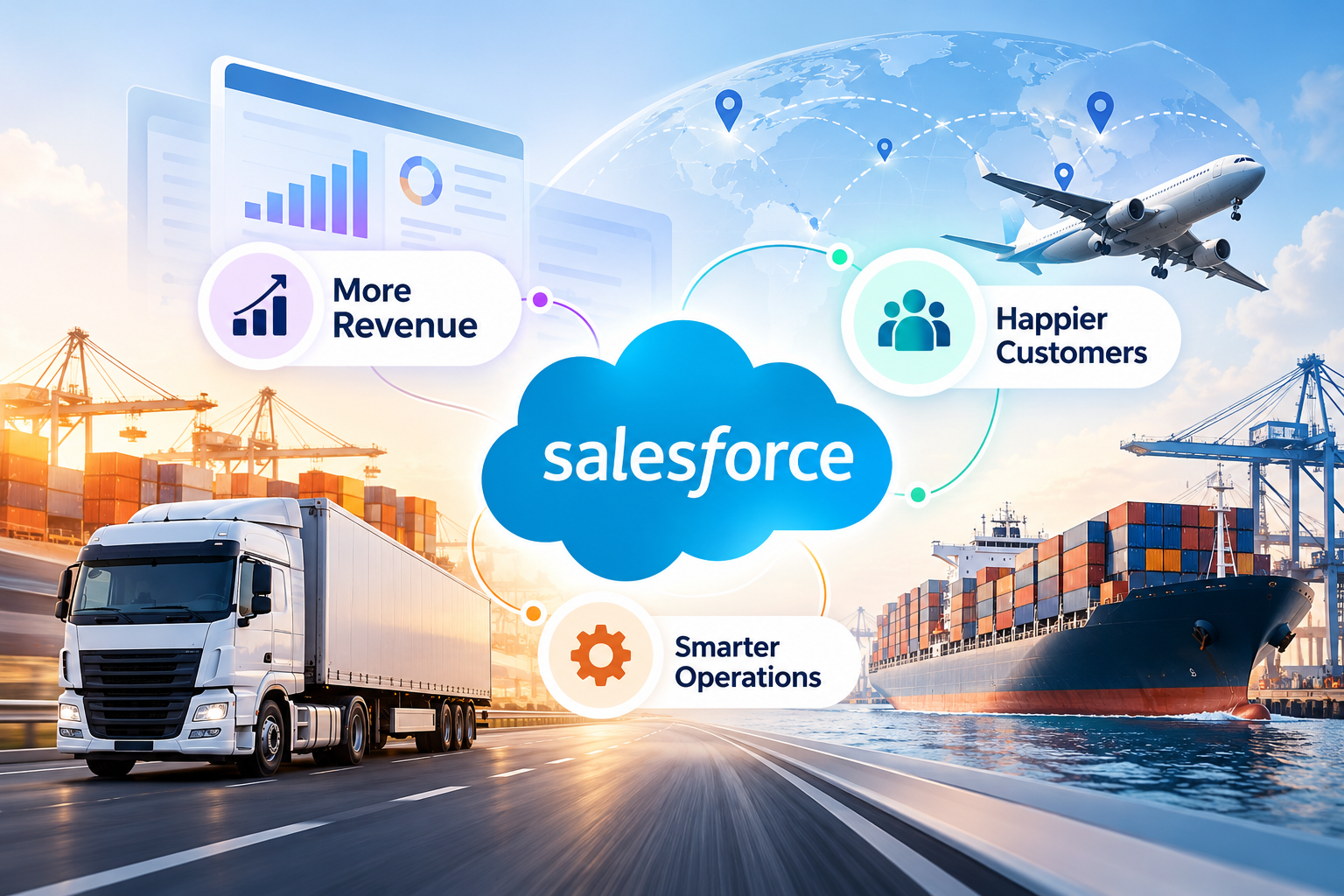
When global supply chains face volatile freight rates, fluctuating fuel surcharges, and rising customer expectations, traditional logistics management reaches its limits. Managing operations through disconnected spreadsheets and legacy software traps valuable operational insights in silos.
Implementing salesforce for transportation and logistics is one of the most effective ways to break down operational silos, streamline complex supply chains, and unlock hidden streams of profitability. By centralizing shipper, passenger, and asset data into a single source of truth, transportation companies can transition from reactive logistics to proactive, revenue-generating powerhouses through Transportation with salesforce.
According to industry benchmarks, logistics firms that adopt
Salesforce CRM for logistics to unify their data across sales, service, and operations see up to a 28% increase in sales productivity and a 30% boost in customer retention.
If you're exploring how to increase transport revenue, here are 9 easy ways to boost revenue using Salesforce tailored specifically for the transportation sector:

1. Leverage AI for Automated Upselling and Cross-Selling
Deploying Salesforce Agentforce allows autonomous AI agents to handle routine travel or shipping requests 24/7 without manual intervention. While gathering missing customer data or tracking shipments, the AI natively suggests relevant, higher-value add-ons, such as upselling a passenger to a premium cabin class or cross-selling hotel and car rental bookings. For B2B freight, Agentforce can recommend guaranteed delivery windows or premium temperature-controlled container capacity during high-demand seasons.
2. Implement Dynamic Pricing Models
Using real-time data within Salesforce Sales Cloud, public and private transport agencies can monitor peak and off-peak travel patterns instantly. By connecting live market feeds, capacity utilization, and seasonal trends, your team can adjust fare and freight structures dynamically based on active market demand. This ensures you maximize yield on every seat or container space rather than leaving money on the table with static pricing models.
3. Personalize Offers with a 360-Degree Customer View
By gathering historic data into a single source of truth through Data Cloud, marketers can build hyper-focused campaigns. Use Salesforce Marketing Cloud to push targeted deals, like volume-based tier discounts for frequent commercial shippers or bundled vacation packages for loyal passengers, directly improving conversion rates and account expansion. Where AI enabled tools like AI VoiceOps can add the enhancement layer on personalization and can also handle the customer support.
3. Personalize Offers with a 360-Degree Customer View
Traditional quote management on legacy systems delays response times, costing you deals when freight rates move fast. Implementing Salesforce Revenue Cloud Advance automates contract generation, CPQ (Configure, Price, Quote), billing, and invoicing natively in the cloud. Delivering faster, highly accurate freight quotes directly increases contract win rates while shrinking billing dispute cycles.
5. Predict Customer Fluctuations via Predictive Intelligence
Equip your account management team with Salesforce Einstein AI to forecast shipper behavior and market demands. Einstein analyzes subtle account activity shifts, such as a sudden drop in weekly load postings or changed booking frequencies, to flag when a major B2B client is scaling back orders. This gives account managers early visibility to step in proactively with retention strategies before revenue is lost.
6. Consolidate and Monetize Partner Networks
Transportation relies heavily on third-party ecosystem partners, 3PLs, sub-contractors, and freight forwarders. Leveraging a salesforce shipper portal with experience cloud allows companies to onboard logistics partners onto unified, secure communities seamlessly. Automating partner communication, co-selling, and managing shared lead pipelines keeps trucks filled and cargo moving, resulting in maximized mutual revenue.
7. Maximize Asset and Capacity Utilization
Unused cargo space, empty backhauls, or idle fleet vehicles represent direct drains on potential profitability. By using specialized Salesforce transportation management tools alongside Field Service (FSL) to track real-time logistics data, companies can efficiently allocate transportation assets based on high-priority routes and shifting customer demand, squeezing more revenue out of existing capital resources.
8. Digitize Legacy Spreadsheets to Eliminate Revenue Leakage
Relying on manual data entry and unintegrated spreadsheets inevitably leads to billing discrepancies, forgotten accessorial fees, and missed follow-ups. Digitizing your freight sales pipeline through a centralized CRM ensures every single inquiry, quote expiration, Detention/Demurrage charge, and ancillary service is logged and actioned, entirely eliminating administrative revenue leakage.
9. Connect Sales and Service via Slack for Faster Deal Cycles
Siloed information delays supply chain exception management. Unifying Slack for Salesforce ensures that field logistics crews, customer care agents, and corporate sales executives share immediate visibility over delays or shipment disruptions. Rapid problem resolution builds customer trust, protecting your recurring contract revenue and preventing churn.
Is Salesforce Good for Freight Brokers?
From experience working on different CRM tools and with our 20+ domain expertise, Yes, Salesforce can be exceptionally well-suited for freight brokers.
When analyzing how freight brokers use salesforce, freight brokerage thrives on speed, relationship management, and margin control. With specialized configurations, freight brokers use Salesforce to:
What Does Agentforce Do in Logistics? Is it necessary?
When your business id AI-ready, Agentforce adds more value, as it introduces autonomous AI agents into the logistics ecosystem to augment human workforces. Key logistics use cases include:
|
01
|
Autonomous Freight Tracking: Answering shipper inquiries regarding load ETA and location updates 24/7. |
|
02
|
Automated Intake & Quote Capture: Reading unstructured tender emails or PDFs, extracting shipment parameters, and creating structured quotes. |
|
03
|
Proactive Exception Management: Detecting shipment delays, recalculating delivery schedules, and alerting consignees automatically before an issue escalates. |
|
04
|
Intelligent Cross-Selling: Identifying complementary services, such as cargo insurance or expedited transit, during routine customer interactions. |
How Do You Integrate a TMS with Salesforce?
Connecting a Transportation Management System (TMS) with Salesforce requires bridging real-time operational execution data with your commercial front office. The most robust methodology involves establishing a mulesoft tms integration:

Mapping Salesforce Products to Logistics Use Cases
Case Snapshot: Transforming Global Freight Operations
-
01
Problem
A multi-regional freight forwarder faced high customer churn due to delayed quote turnarounds (averaging 24–48 hours) and disconnected shipment tracking systems across 12 regional branches.
-
02
Solution
Implemented Salesforce Sales Cloud integrated with the core TMS via MuleSoft, alongside a Salesforce shipper portal with Experience Cloud featuring automated CPQ and real-time shipment status dashboards.
-
03
Metric / Result
Quote generation turnaround dropped from 24 hours to under 3 minutes, leading to a 35% increase in contract win rateand a 40% reduction in inbound support tickets within 6 months..
Ecosystem Systems We Integrate With
To deliver a connected supply chain, Salesforce must talk directly to your core operational technology stack. Typical integrations include:
|
195
Salesforce certifications
|
250+
Successful implementations globally
|
BugendaiTech is a certified Salesforce Consulting Partner with 195 certifications and over 250+ successful implementations globally. Our dedicated transportation and logistics practice helps carriers, 3PLs, and freight brokers modernize operations, break down silos, and drive predictable revenue growth.
Ready to unlock hidden revenue in your logistics supply chain?