Why Enterprise Integrations Fail (And How to Prevent It)
Published on: 26 February 2026
Author: Annapurna
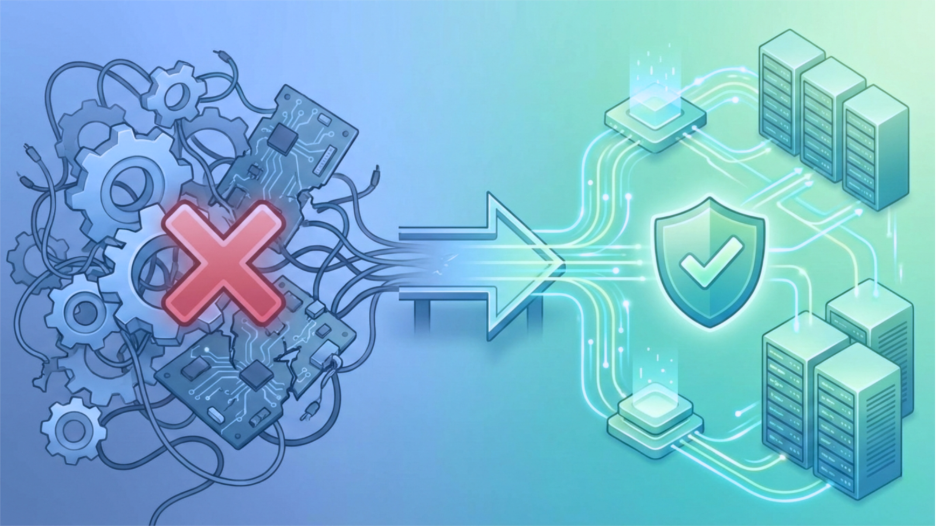
In 2026, enterprises are no longer integrating just two systems.
They’re integrating AI copilots, automation platforms, cloud data warehouses, CRMs, ERPs, marketing automation tools, customer portals, IoT systems, and custom apps, all at once.
Despite heavy investments, enterprise integrations continue to fail. Delays. Budget overruns. Broken APIs. Security risks. Low adoption.
The real question isn’t whether integration is hard.
The real question is:
Why do enterprise integrations fail, and how can you prevent it?
This article breaks down:
- Core failure reasons
- Business impact
- A prevention framework
- Enterprise integration best practices for 2026
- A practical integration risk checklist
The 2026 Context: AI + Automation + Cloud-First + Multi-System Stacks
Modern enterprises are operating in:
- Cloud-first ecosystems
- Multi-vendor SaaS environments
- API-driven architectures
- AI-enabled automation layers
- Real-time data orchestration requirements
Organizations rely on platforms like Salesforce, modern ERPs, marketing clouds, AI engines, and middleware tools to drive business outcomes.
And the challenge isn’t slowing down.
Core Reasons Enterprise Integrations Fail
1. No Clear Enterprise Integration Strategy
Many companies jump into tool implementation before defining:
- System ownership
- Data flow architecture
- API governance
- Long-term scalability plans
Without a structured enterprise integration strategy, integrations become patchwork fixes.
2. Underestimating API Integration Challenges
Common API integration challenges include:
- Poor documentation
- Version mismatches
- Rate limits
- Authentication conflicts
- Latency issues
- Security vulnerabilities
Teams often assume APIs will “just connect.”
They don’t.
3. Siloed Teams & Misaligned Stakeholders
IT, security, marketing, sales, and operations often work independently.
Result:
- Conflicting requirements
- Duplicated systems
- Broken workflows
- Shadow integrations
Integration failure is often a people problem disguised as a technology problem.
4. Ignoring Enterprise Software Implementation Risks
Risks typically ignored:
- Change management gaps
- Data migration errors
- Inadequate testing
- Vendor lock-in
- Compliance oversights
- Scalability limitations
Enterprise software implementation risks compound quickly when AI and automation layers are added without governance.
5. No Monitoring or Lifecycle Management
Integration is not a one-time project.
It’s an ongoing lifecycle.
Without observability and governance:
- APIs break silently
- Data pipelines fail
- AI outputs degrade
- Business reporting becomes unreliable

The Business Impact of Failed Integrations
When integrations fail, the cost is not just technical.
It’s strategic.
Business consequences include:
- Delayed product launches
- Revenue leakage
- Inaccurate forecasting
- Customer experience breakdowns
- Security exposure
- Operational inefficiencies
- Loss of executive confidence
In 2026’s AI-driven ecosystem, bad integration directly impacts automation reliability and decision intelligence.
The BugendaiTech Integration Prevention Framework (BIF Model™)
To address how to prevent enterprise integration failure, we’ve developed a practical framework:
BIF Model™ - Build | Integrate | Fortify
Phase 1: BUILD (Strategic Foundation)
- Define enterprise integration strategy
- Map system dependencies
- Design API-first architecture
- Establish governance standards
- Conduct risk assessment
Phase 2: INTEGRATE (Execution Discipline)
- Use middleware intelligently
- Standardize API documentation
- Implement automated testing
- Validate data integrity
- Ensure security-first integration
Phase 3: FORTIFY (Future-Ready Scaling)
- Continuous monitoring
- AI performance validation
- Version management
- Integration audits
- Scalable cloud architecture reviews
Integration must evolve as your enterprise grows.
Real-World Scenario
A global enterprise implemented CRM + ERP + marketing automation + AI analytics.
The systems were individually strong.
The integration was weak.
Problems faced:
- Duplicate customer records
- AI generating incorrect insights
- Delayed order processing
- Revenue reconciliation gaps
Root cause?
No unified enterprise integration strategy and inadequate API governance.
After restructuring integration architecture and introducing lifecycle monitoring, system performance improved by 38% and reporting accuracy stabilized.
Integration didn’t fail because of tools.
It failed because of strategy gaps.
How to Prevent Enterprise Integration Failure
- ✔ Start With Architecture, Not Tools
Design integration architecture before implementation. - ✔ Create API Governance Policies
Define naming standards, authentication rules, rate management, and documentation norms. - ✔ Implement Phased Rollouts
Avoid “big bang” integrations. - ✔ Prioritize Data Integrity
Clean data before integration. - ✔ Conduct Integration Risk Audits
Regularly evaluate integration performance. - ✔ Align Business + IT Leadership
Integration is a cross-functional responsibility.

Enterprise Integration Best Practices 2026
- AI-aware integration monitoring
- Cloud-native orchestration
- API lifecycle management
- Security-first architecture
- Scalable event-driven models
- Automation testing pipelines
- Data observability frameworks
- Vendor-neutral middleware strategy
In 2026, integration is the backbone of enterprise intelligence.
Enterprise Integration Risk Checklist
Use this before starting any project:
- Do we have a documented enterprise integration strategy?
- Are API standards defined?
- Have we assessed enterprise software implementation risks?
- Is data governance clearly established?
- Are monitoring tools in place?
- Do we have rollback mechanisms?
- Is security compliance reviewed?
- Is there executive sponsorship?
- Have we mapped downstream dependencies?
- Is AI output validation included?
If you answered “No” to more than 2, your integration is at risk.
Frequently Asked Questions (FAQ)
❓ Why do enterprise integrations fail?
They fail due to poor strategy, underestimated API integration challenges, weak governance, siloed teams, and ignored enterprise software implementation risks.
❓ What are common API integration challenges?
Authentication conflicts, version mismatches, rate limits, latency, poor documentation, data inconsistency, and security vulnerabilities.
❓ What is an enterprise integration strategy?
An enterprise integration strategy defines how systems connect, how data flows, governance rules, scalability plans, and long-term architecture alignment.
❓ How do you reduce enterprise software implementation risks?
By conducting risk assessments, phased rollouts, cross-team alignment, strong testing practices, and ongoing monitoring.
❓ What are enterprise integration best practices in 2026?
AI-aware monitoring, cloud-native architecture, API lifecycle governance, scalable automation, security-first design, and continuous integration audits.
Final Thoughts
In 2026, integration is no longer a backend IT task.
It is a strategic enabler of AI, automation, customer experience, and revenue growth.
Organizations that treat integration as architecture, not plumbing, outperform competitors.
Call to Action
Enterprise integrations don’t fail overnight.
They fail silently, until business impact becomes visible.
If you’re planning a transformation initiative in 2026:
Talk to our integration experts at BugendaiTech
Let’s build integrations that scale, secure, and succeed.