Is Human Expertise the Secret Behind Successful AI driven innovation?
Published on: 09 January 2026
Author: Annapurna
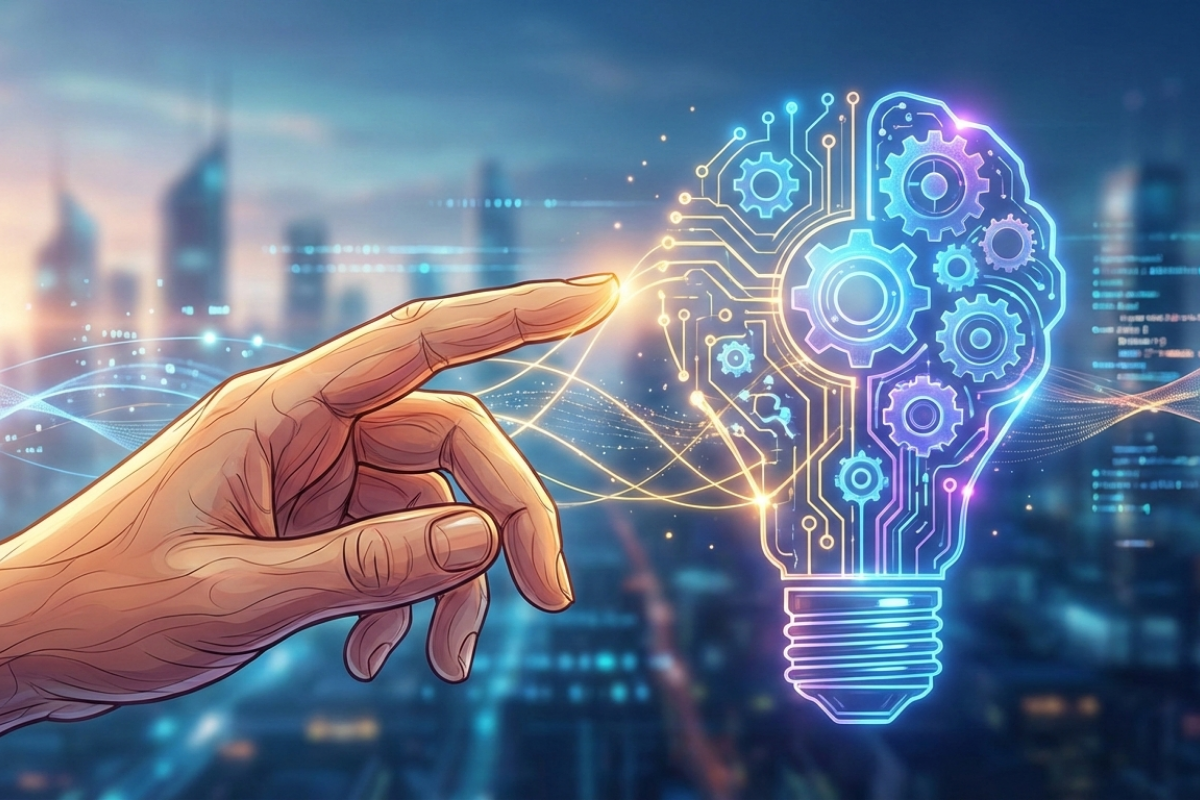
Artificial Intelligence is reshaping how businesses operate, innovate, and compete. From predictive analytics to intelligent automation, AI-driven innovation is helping organizations move faster and make smarter decisions.
Yet, despite heavy investments in AI platforms and tools, many initiatives fail to deliver meaningful outcomes.
Why?
Because AI alone is not the differentiator.
Human expertise is.
The most successful organizations don’t treat AI as a replacement for people, they use it as a force multiplier, guided by domain knowledge, judgment, and experience. In this blog, we explore why human-centered AI is critical, how businesses can balance automation with judgment, and what practical AI-driven problem-solving really looks like in the enterprise.
AI Is Powerful, But Context Is Human
AI systems excel at processing vast volumes of data, identifying patterns, and making predictions at scale. However, AI lacks:
- Business intuition
- Ethical reasoning
- Industry-specific nuance
- Accountability for outcomes
This is where AI solutions guided by human expertise become essential.
For example, an AI model might recommend reducing costs by cutting customer support interactions. A human expert understands that this could negatively impact customer trust and long-term revenue. The insight doesn’t come from data alone; it comes from experience.
AI-driven innovation succeeds when humans provide context, direction, and validation.
The Role of Human Expertise in AI-Driven Problem Solving
1. Defining the Right Problem
AI can solve problems, but only the ones it’s given.
Human experts play a crucial role in:
- Identifying high-impact use cases
- Framing the right business questions
- Ensuring AI aligns with strategic goals
Without this guidance, AI initiatives often become expensive experiments rather than value drivers.
2. Training AI With Meaningful Context
AI models learn from data, but humans decide:
- Which data matters
- What biases to remove
- How outcomes should be interpreted
This is especially important in industries such as healthcare, finance, and manufacturing, where incorrect decisions can have real-world consequences. Human-centered AI use cases in business ensure AI outputs are accurate, ethical, and actionable.
3. Balancing AI Automation With Human Judgment
Automation is valuable, but not everything should be automated.
Effective organizations:
- Automate repetitive, rules-based tasks
- Keep humans involved in complex, high-risk decisions
- Use AI recommendations as inputs, not final answers
This balance of AI automation with human judgment leads to better decisions, higher trust, and stronger adoption across teams.

Real-World Examples of Human-Centered AI in Action
AI in Customer Service
AI chatbots can handle routine queries, but human agents step in for emotionally sensitive or complex cases, ensuring empathy and resolution quality.
AI in Data Analytics
AI highlights trends and anomalies, while business leaders interpret what those insights mean for pricing, operations, or growth strategy.
AI in Enterprise Automation
AI agents orchestrate workflows, but humans define escalation rules, approvals, and exceptions to maintain governance and accountability.
These examples show that AI-driven problem-solving works best when humans stay in the loop.
Why Businesses That Ignore Human Expertise Struggle?
Organizations that focus only on technology often face:
- Low AI adoption
- Poor trust in AI outputs
- Ethical and compliance risks
- Misalignment between AI and business goals
In contrast, companies that invest in people, training, governance, and change management see AI become a competitive advantage rather than a liability.
Human-Centered AI Use Cases in Business
To understand the power of this synergy, let’s look at how industries are applying these principles today:
| Industry | AI Role (Automation) | Human Role (Judgment) | Outcome |
|---|---|---|---|
| Healthcare | Pattern recognition in X-rays | Final diagnosis and patient empathy | Higher accuracy & better care |
| Finance | Fraud detection alerts | Investigating complex social engineering | Reduced risk & customer trust |
| Marketing | Content generation & scaling | Brand voice alignment & emotional hooks | 5× output with high engagement |
Building a Human-Centered AI Strategy
To unlock sustainable AI-driven innovation, businesses should:
- Involve domain experts early in AI initiatives
- Design AI workflows with human checkpoints
- Establish AI governance and ethical guidelines
- Upskill teams to work confidently with AI
- Measure success based on business outcomes, not model accuracy alone
At BugendaiTech, we help enterprises design AI solutions that combine advanced automation with deep human expertise- ensuring innovation that is scalable, responsible, and impactful.
Read our vision for the AI Workforce 2026 to see how we are preparing teams for this transition.
The Future of AI Is Human-Centered
AI will continue to evolve, becoming faster, smarter, and more autonomous. But the organizations that truly succeed will be those that recognize one core truth:
AI doesn’t replace human expertise; it amplifies it.
The future belongs to businesses that combine the speed of machines with the wisdom of people.
Ready to build AI solutions guided by human expertise? Talk to BugendaiTech experts to design responsible, high-impact AI strategies for your enterprise.