Agentforce 360 And The Rise Of The Agentic Enterprise
Published on: 05 December 2025
Author: Annapurna
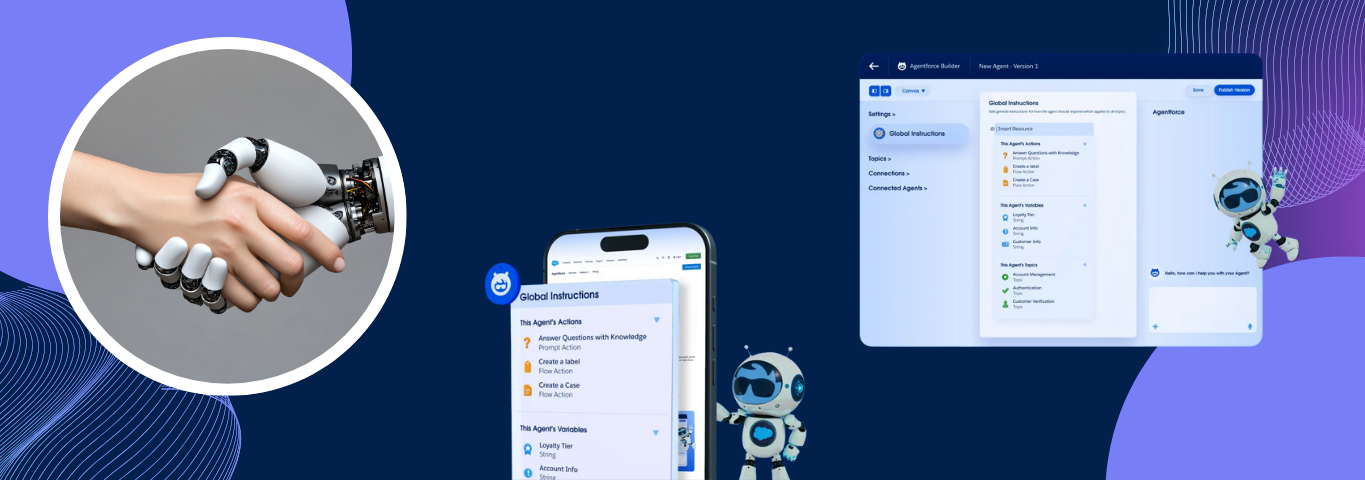
The Next Major Shift in Enterprise Automation: The Agentic Enterprise
The next major shift in enterprise automation is here: the Agentic Enterprise, where AI agents don’t replace people, they elevate them. Built around AI agents that reason, act, and collaborate with humans, this model enables real-time automation, cross-functional orchestration, and scalable operational intelligence. Salesforce’s Agentforce 360 crystallizes this vision by uniting agents, data, apps, and the user experience into a single, governed platform, unlocking new possibilities for enterprise automation and workflow intelligence.
What Is an Agentic Enterprise?
An Agentic Enterprise is an organization where autonomous AI agents are first-class participants in business processes: they interact with systems, other agents, and people to complete tasks end-to-end. These agents are context-aware, governed, and grounded in trusted enterprise data, enabling enterprise intelligence at scale rather than brittle point automations. Salesforce positions Agentforce 360 as the platform that makes this model practical and secure for real businesses.
1. Deliver Trusted Automation with Agentforce 360
Agentforce 360 combines an agent platform, a unified data layer, Customer 360 business logic, and Slack as a conversational surface to create a trusted automation fabric. Key capabilities include agent builders, hybrid reasoning (rule + LLM), observability dashboards, and a voice layer, all designed to ensure predictable, auditable automation. For enterprises, this means AI agents can execute processes while preserving governance and traceability.
Why It Matters for Enterprise Automation?
- Agents act on governed, contextualized data (Data 360) to reduce the risk of or prevent hallucinated decisions.
- Observability and agent scripting let operations teams monitor and tune reasoning, which is critical for compliance and scale.
2. Automate Cross-Functional Workflows with AI Agents
Agentic AI shines where workflows cross teams and systems, for example, lead-to-cash, service resolution, or supply-chain orchestration. Unlike single-purpose bots, agentic systems coordinate multi-step tasks, hand off between agents and humans, and adapt to changes in real time. Salesforce’s approach embeds agents in Customer 360 apps (Sales, Service, Field Service, Revenue Management) so actions are taken directly where work happens. That means fewer handoffs, faster cycle times, and more reliable outcomes.
Practical Use Cases:
- Agentforce Sales recommending next-best actions and generating quotes.
- Agentforce Service proactively resolving support cases and reducing response times.
3. Make Data the Engine: Data 360 & Workflow Intelligence
The core of any safe, useful agent is context, and that context is data. Data 360 converts structured and unstructured enterprise data into contextual signals agents can trust: PDFs, logs, analytics, and semantic translations all become usable context. When agents are grounded in this layer, they can deliver process intelligence, surface the right next step, predict escalations, and close loops automatically.
Enterprise workflow intelligence emerges when agents continuously learn from outcomes and telemetry, enabling optimizations such as dynamic routing, SLA prioritization, and anomaly detection, turning reactive work into proactive operations.
4. Design, Govern, and Scale Agents Safely
Deploying agentic AI at enterprise scale requires strong guardrails. Salesforce’s Agentforce playbook emphasizes responsible agent design: clear objectives, hybrid reasoning (explicit rules + LLMs), model choice and isolation, observability, and human-in-the-loop escalation paths. These practices reduce risk, improve predictability, and make agents auditable for compliance teams.
Best Practices We Recommend for Enterprises:
- Define agent intent and success metrics before development.
- Use hybrid reasoning (agent scripts + LLM) so deterministic logic governs critical decisions.
- Implement monitoring dashboards to track accuracy, drift, and incidents.
5. Real Results: Productivity, Cost Savings & 24/7 Intelligence
Agentforce 360 is already delivering measurable outcomes. Salesforce cites multiple customer wins where agents dramatically reduced response times, deflected cases, and extended service coverage around the clock, proving that agentic approaches scale beyond pilots into production value. Examples include significant case deflection, faster resolution times, and improved customer satisfaction.
Business Impact You Can Expect:
- Faster cycle times and fewer manual touchpoints (improved enterprise automation).
- Lower operational costs by automating repetitive work and intelligently routing exceptions.
- Continuous productivity gains as agents learn and teams shift to higher-value work.
Bringing Agentic AI to Your Organization: A Practical Roadmap
- Start with high-value workflows. Identify cross-functional processes (service triage, order orchestration, IT ops) where agents reduce handoffs and improve SLAs.
- Ground agents in Data 360 or a governed data layer. Ensure semantic consistency so agents correctly interpret enterprise metrics.
- Adopt hybrid reasoning and agent scripts. Use deterministic rules for compliance-critical steps and LLM reasoning for flexible, user-facing interactions.
- Instrument observability from day one. Monitor performance, accuracy, and user feedback to refine agent behavior.
- Scale through templates and partner accelerators. Use industry-specific agent templates and partner-built connectors to speed deploymen

The Future of Autonomous Enterprise Operations
The Agentic Enterprise is more than a buzzword; it’s a practical architecture for the future of enterprise work. By connecting humans, AI agents, data, and collaboration surfaces like Slack, businesses can achieve sustained operational intelligence, 24/7 productivity, and responsible automation at scale. Organizations that adopt agentic patterns now will be better positioned to compete faster, safer, and with more human-centered outcomes, explore our service page.
Conclusion
Agentic AI delivers a new level of enterprise automation and workflow intelligence: agents that act, adapt, and collaborate with humans to unlock productivity and resilience. If you’re exploring how to bring Agentforce 360-style capabilities into your operations, BugendaiTech can help, from pilot design and data readiness to agent design, governance, and scale.
Explore now 5 Practical Ways Agentic AI Is Transforming Enterprise Processes?
Ready to Design Your Agentic Enterprise? Contact with BugendaiTech Experts for a tailored Agentforce readiness plan.